

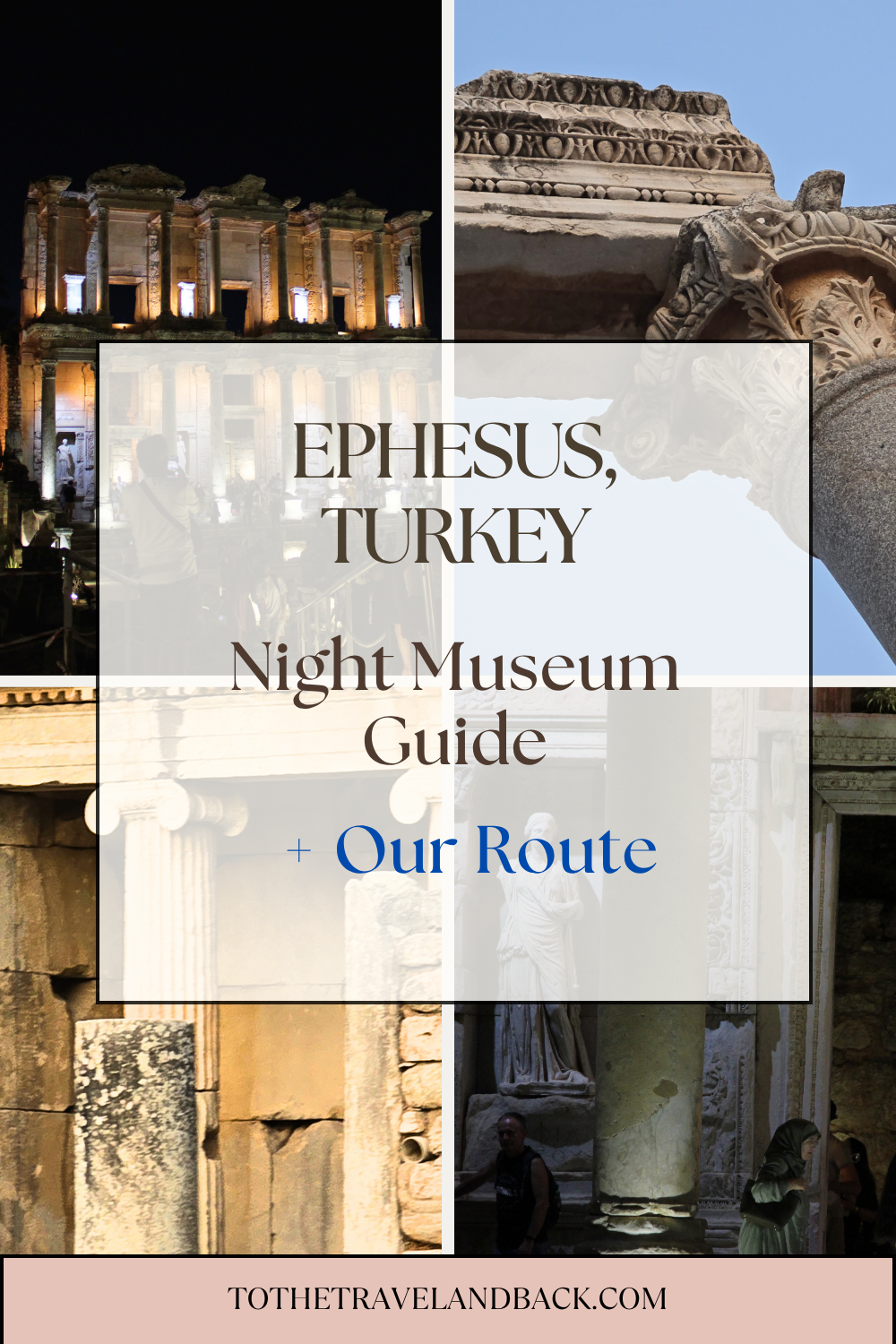
We visited in September, with a toddler and a kid in tow, and I'd already been warned that "off-season" is a bit of a polite fiction here — the ancient city at midday was still brutally hot, with almost no shade to hide in. So when I found out you could do the whole thing after dark instead — cooler air, empty streets, the Library of Celsus lit up like it's showing off — I picked the night session without much hesitation, even knowing it meant seeing fewer attractions than a full daytime visit would. Anyway, there's still plenty to see with kids. Here's everything you need to know for 2026, plus exactly what happened when we tried it with two small humans in tow.
Why Visit Ephesus?
Ephesus was once one of the most important cities on the Aegean coast — founded as a Greek settlement, later the capital of Roman Asia, and a major hub for East-West trade thanks to its harbor. It grew up around an ancient shrine to Artemis and later became a key city in the spread of early Christianity, with St. Paul launching several missions from here. Its history stretches back roughly 8,000 years, through Bronze Age settlement, Greek colonization, and centuries of shifting rule between Persians, Greeks, and eventually Rome, under which it flourished as a "free" city allowed to mint its own coins.
Most of what you actually walk through today — nearly 2,000 years old at this point — is the theatre, the Library of Celsus, the bathhouses, and the sprawling commercial agora, built or expanded during the Roman peace of the 1st and 2nd centuries AD, when Ephesus was booming as a trade and administrative center. It's less "pile of old rocks" and more "entire functioning Roman metropolis, paused mid-sentence."
If you have time after your visit, the nearby village of Şirince is worth the detour — a former Greek settlement known for local wine and olive production, with old stone houses that now double as guesthouses.
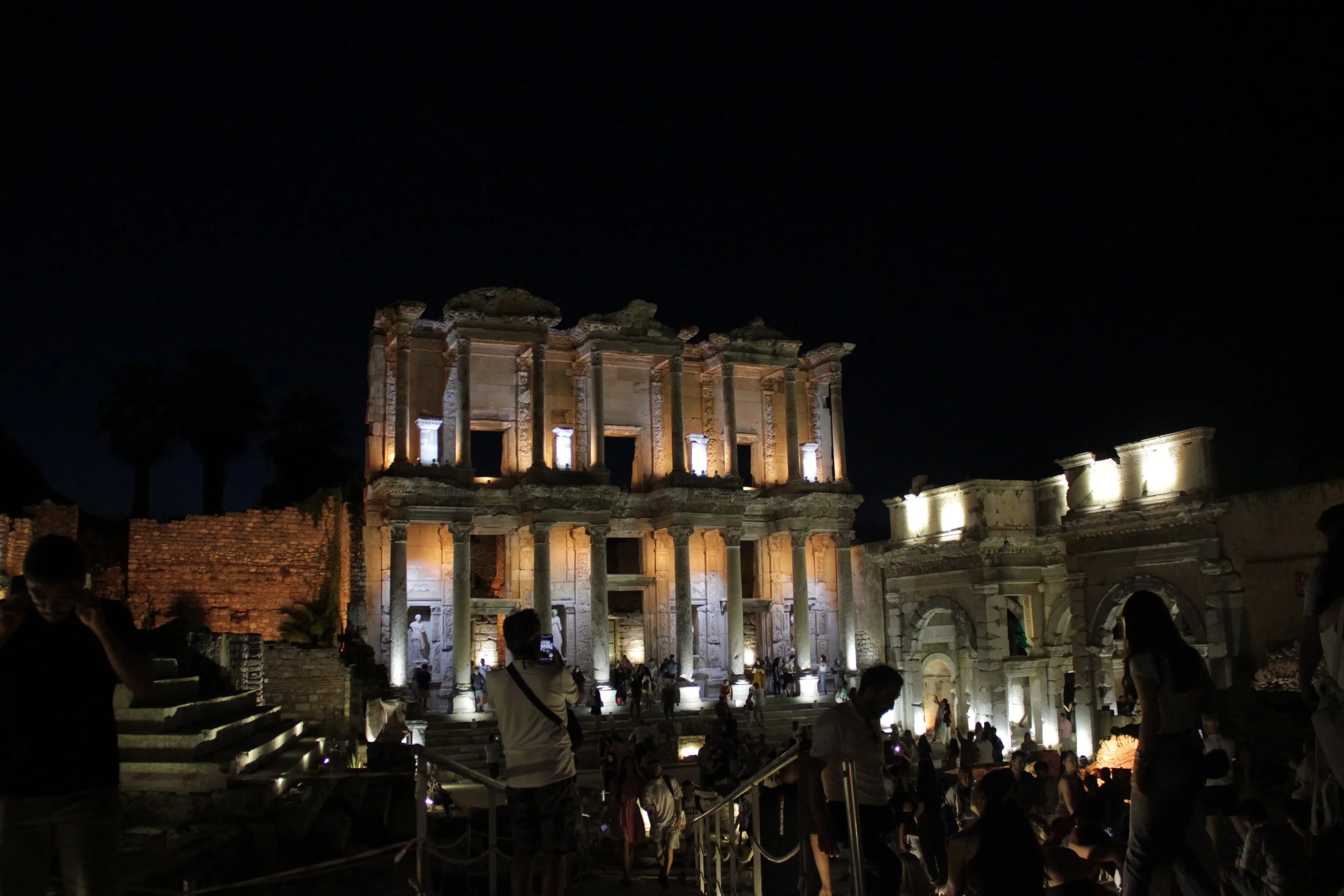
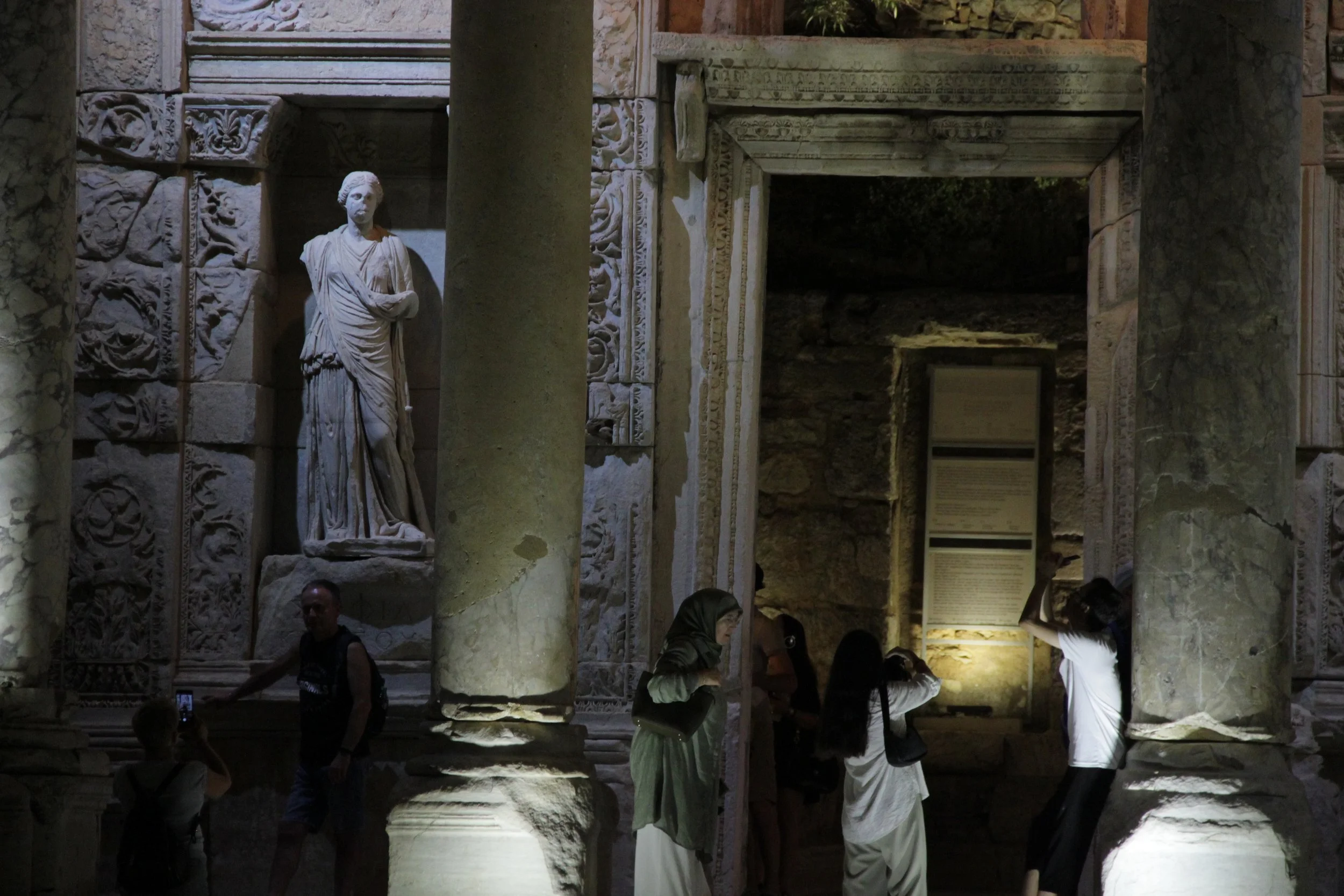
Best Photo Spots at Ephesus at Night
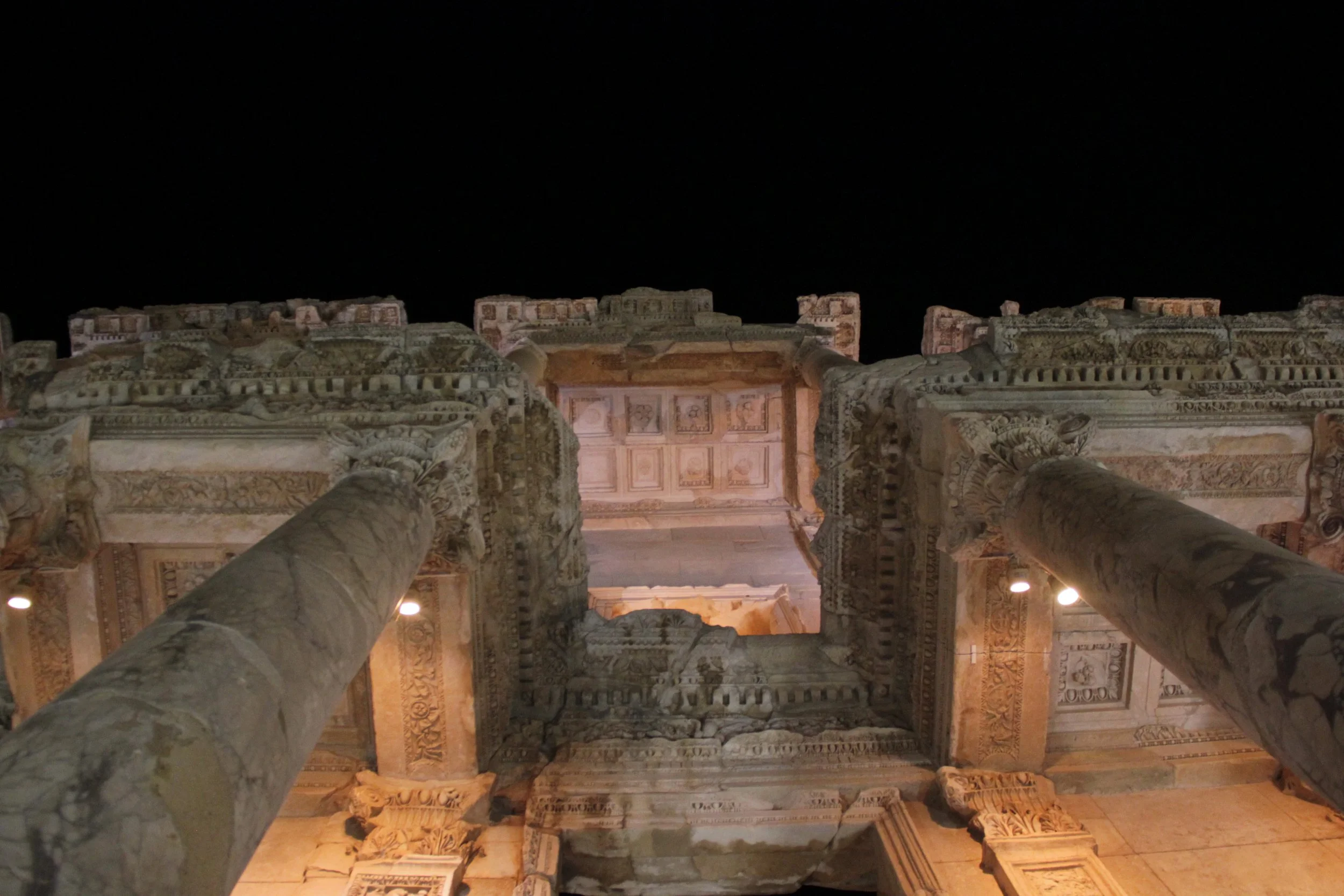
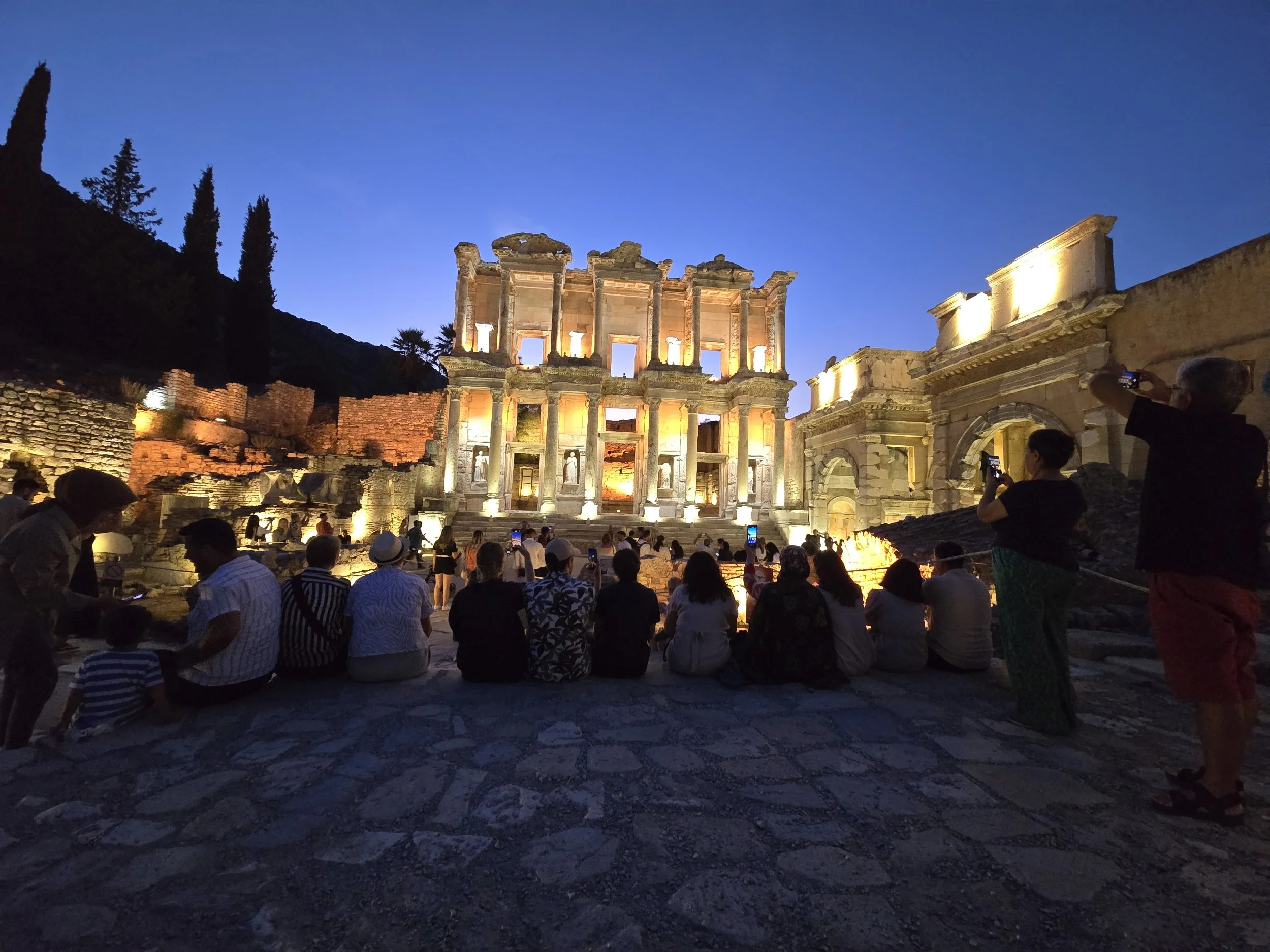
Quickly, because this really deserves its own full article: the illuminated Library of Celsus façade is the obvious hero shot, especially in the minutes right after the lights switch on. The Great Theatre, shot from partway up the seating rows looking down toward the stage, gives you scale without the crowds. Curetes Street, photographed looking downhill toward the Library, captures the whole "glowing marble road" atmosphere in one frame. If you want the full breakdown — best angles, timing around sunset, and gear tips for low light — that's a separate guide on its own.
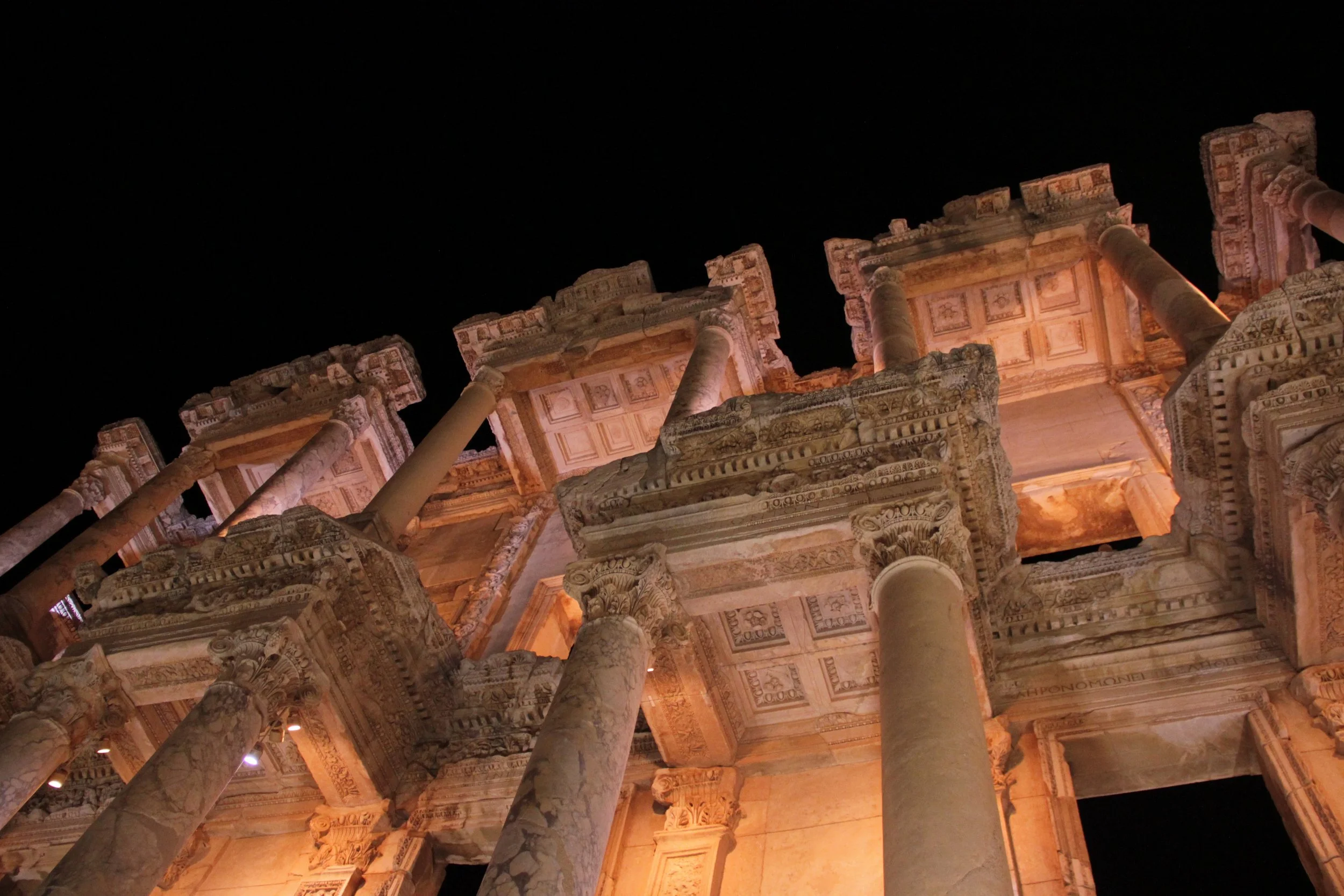
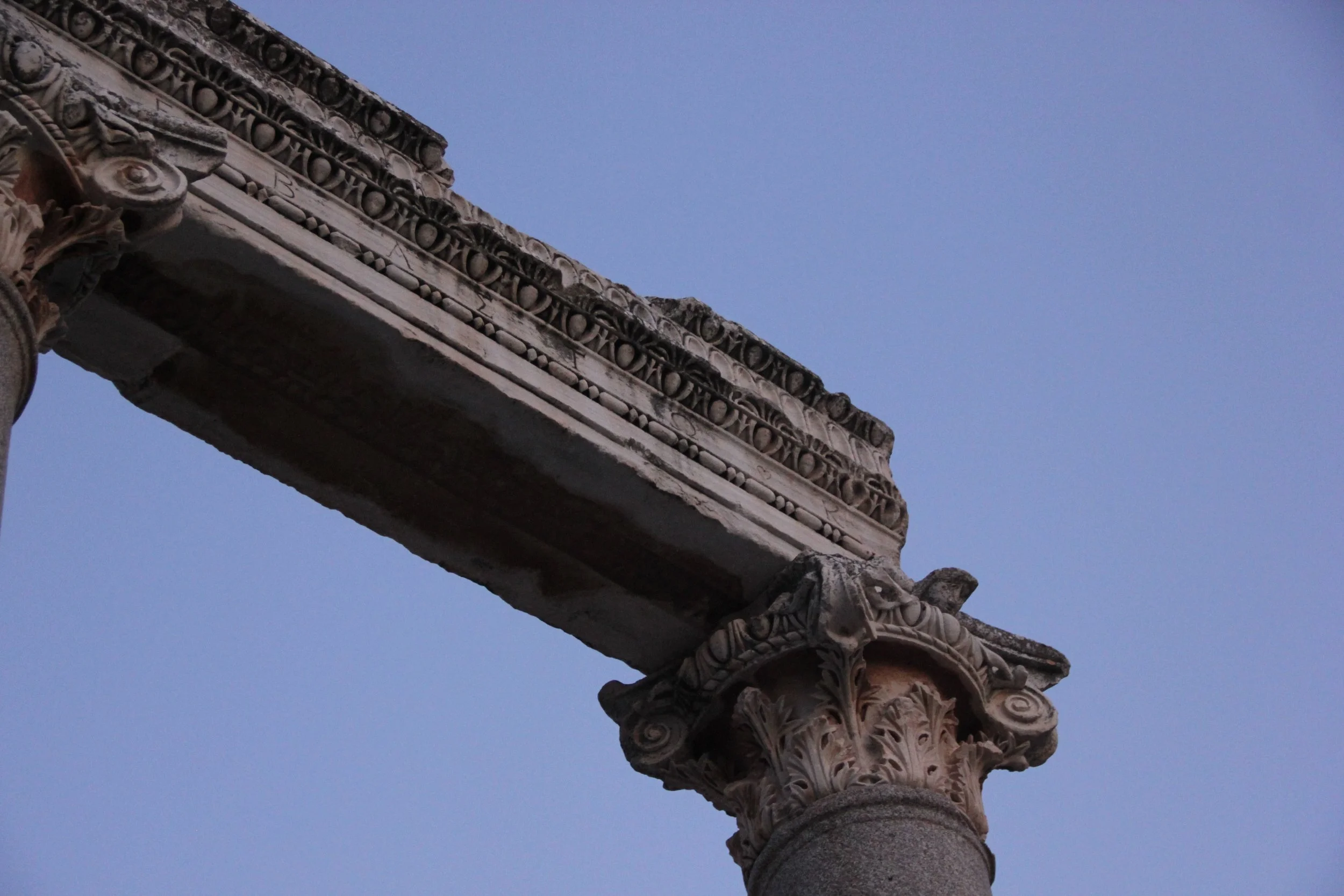
Ephesus Night Museum 2026: Opening Hours & Ticket Prices
Let's get the practical stuff out of the way first.
Daytime hours
Ephesus is open every single day of the year. As of 2026, the standard daytime hours are 08:00 to 18:45, and the ticket booths close at the same time. Hours do shift a little by season (some sources list an earlier winter closing around 17:00–18:00), so if you're visiting outside high summer, give the official page I've linked below a quick glance before you plan your day.
Night Museum hours
The "Night Museology" program runs on Wednesday, Thursday, Friday, and Saturday, from 19:00 to 23:00, with the ticket office closing earlier, around 22:00. Entry after dark is through the lower gate only — the upper gate shuts for the evening. The season generally runs from early June through late September/early October, though exact end dates shift year to year (and even mid-season concerts and events can cancel a night session entirely — Ephesus hosted opera, ballet, and concert nights in 2026 that bumped the museum schedule on a handful of dates).
Bottom line: don't trust a blog post (including this one) for the exact week-by-week schedule. Confirm on the official Ministry of Culture and Tourism page before you book anything, because night visiting isn't guaranteed on every one of those four weekly days.
Price
General admission (day or night): €40 per adult. This now includes the Ephesus Experience Museum near the lower gate — you can't buy the ruins without it, and honestly, it's a nice add-on for context.
Night tickets cost the same as day tickets. There's no night surcharge — you're simply buying a separate ticket for the evening session.
Terrace Houses: +€15, sold separately, valid for day or night visits — yes, they're open and illuminated on the night route too, you just still need this extra ticket to get in. The old combined ticket is gone, so don't believe anyone still quoting you €52.
Children under 8: free (bring a passport or ID — they will ask).
No student or senior discounts for foreign visitors.
Can You Stay in Ephesus From Daytime Until the Night Museum?
Short answer: not on the same ticket, and probably not without leaving the site at some point. Daytime ticket sales and gate access wind down around 18:45, and the night session doesn't officially start until 19:00, with entry funneled through the lower gate only. In practice, that gap means the two visits are treated as separate events with separate tickets — you can't wander in at 4 p.m. and simply linger until the lights come on for free. If you want both experiences, plan for either a full exit-and-re-entry (buying a second ticket) or accept that you'll do one or the other, not a seamless day-into-night marathon. Given the heat and the fact that a night visit alone already takes real energy, I'd personally pick one session and do it properly rather than trying to stitch both together.
How Many Attractions Can I See at Day vs. at Night in Ephesus?
During the day, with the full site open from both gates, you can realistically cover almost everything: the Great Theatre, the Library of Celsus, Curetes Street, the Commercial Agora, the Temple of Hadrian, the public latrines, the Odeon, and — if you buy the extra ticket — the Terrace Houses.
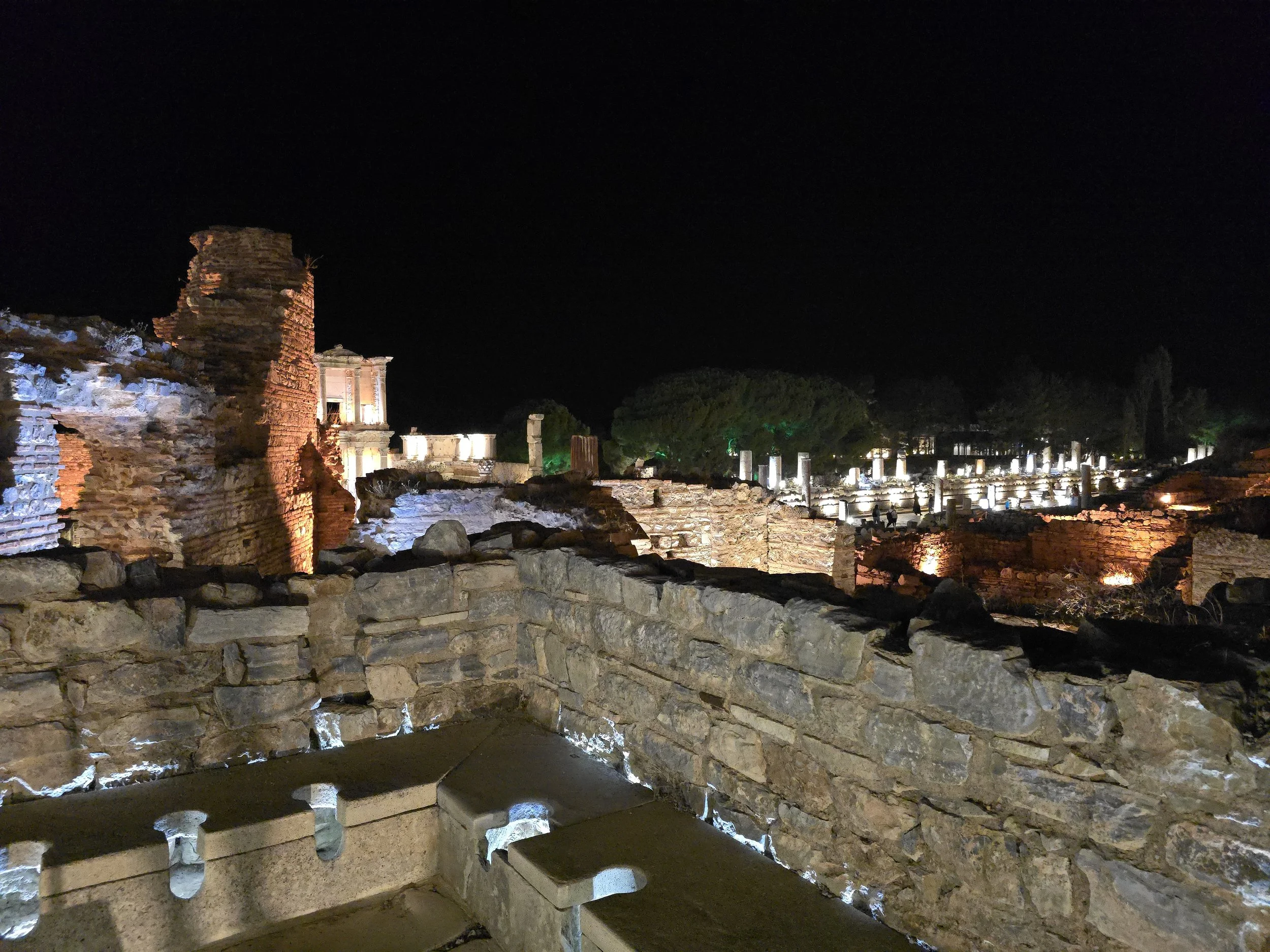
At night, the illuminated route is more limited. It generally covers the lower part of the city up to around the Temple of Hadrian — which, to be fair, is where most of the postcard-worthy stuff lives: the Library of Celsus, the Great Theatre, Curetes Street, the latrines, and the Terrace Houses (yes, still an additional ticket at night too — the extra fee doesn't disappear just because the sun did). Areas further up toward the upper gate, like the State Agora and Odeon, aren't part of the standard night circuit. A couple of locals told me this is because of safety concerns — steeper climbs, darker paths — though I couldn't get that confirmed officially, so take it as local color rather than fact.
So: day visit for total coverage, night visit for the highlight reel under dramatic lighting. Both are valid strategies depending on what you're after.
What to See in Ephesus?
A quick cheat sheet of the big names, since half the fun of Ephesus is knowing what you're actually looking at instead of just going "ooh, columns."
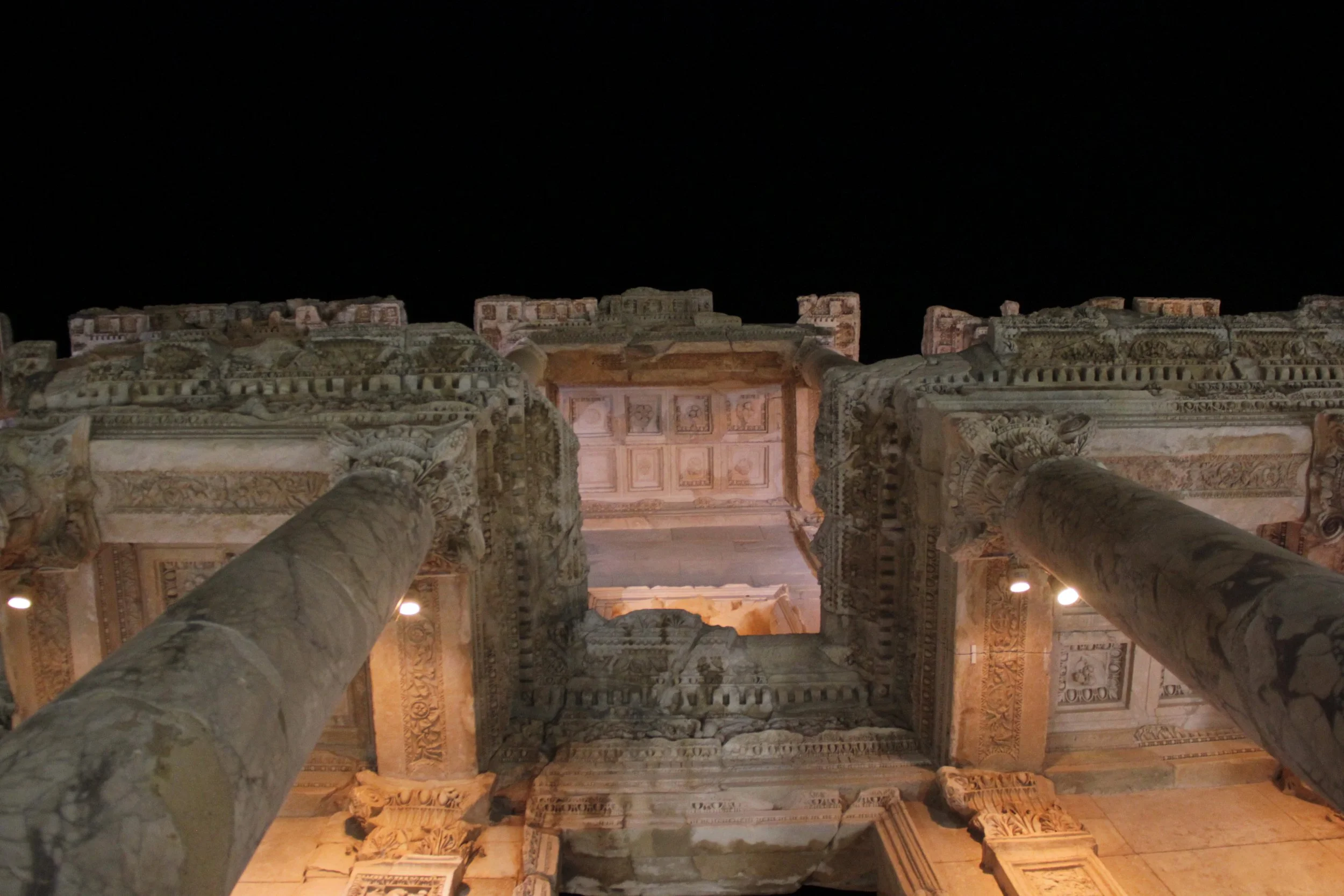
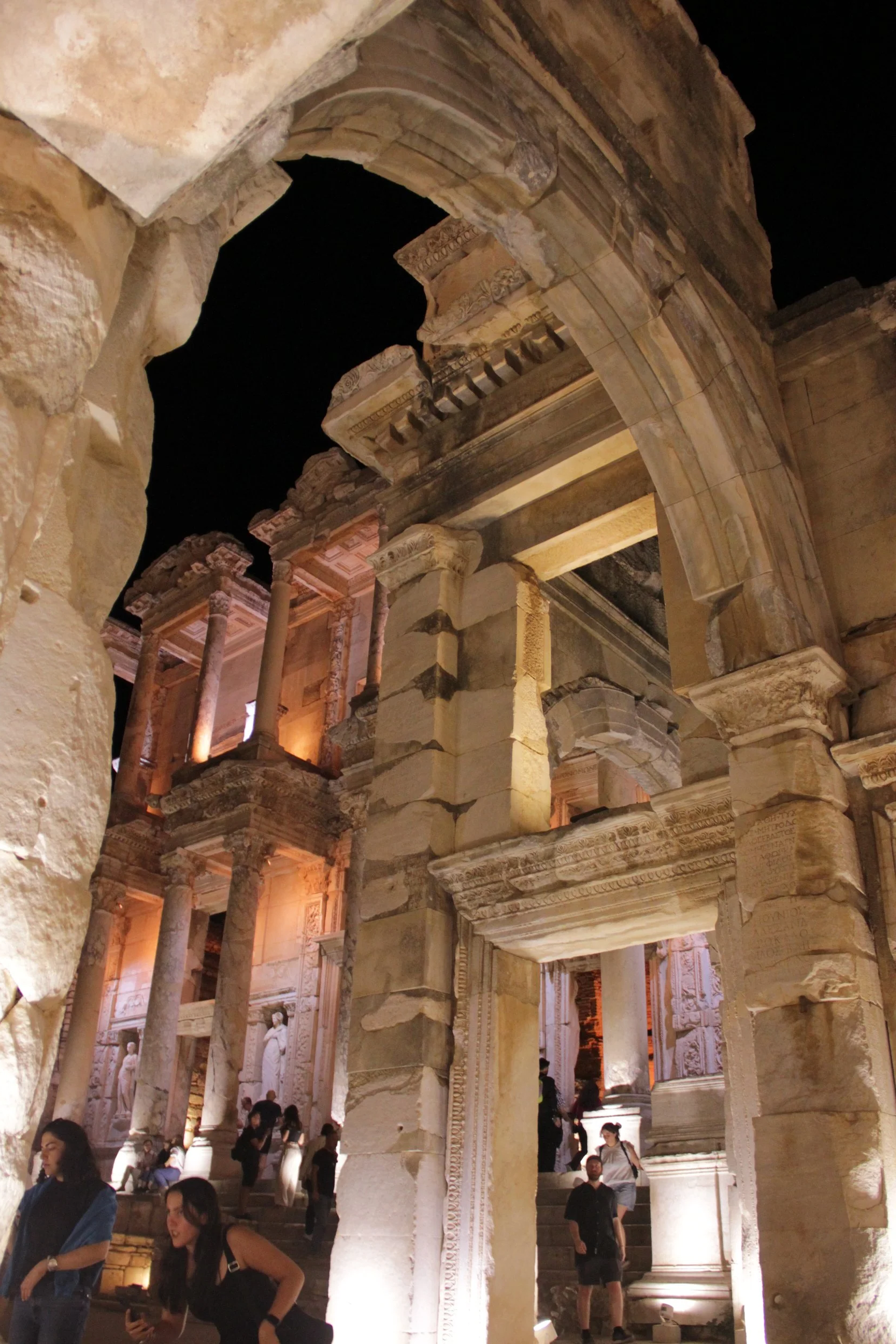
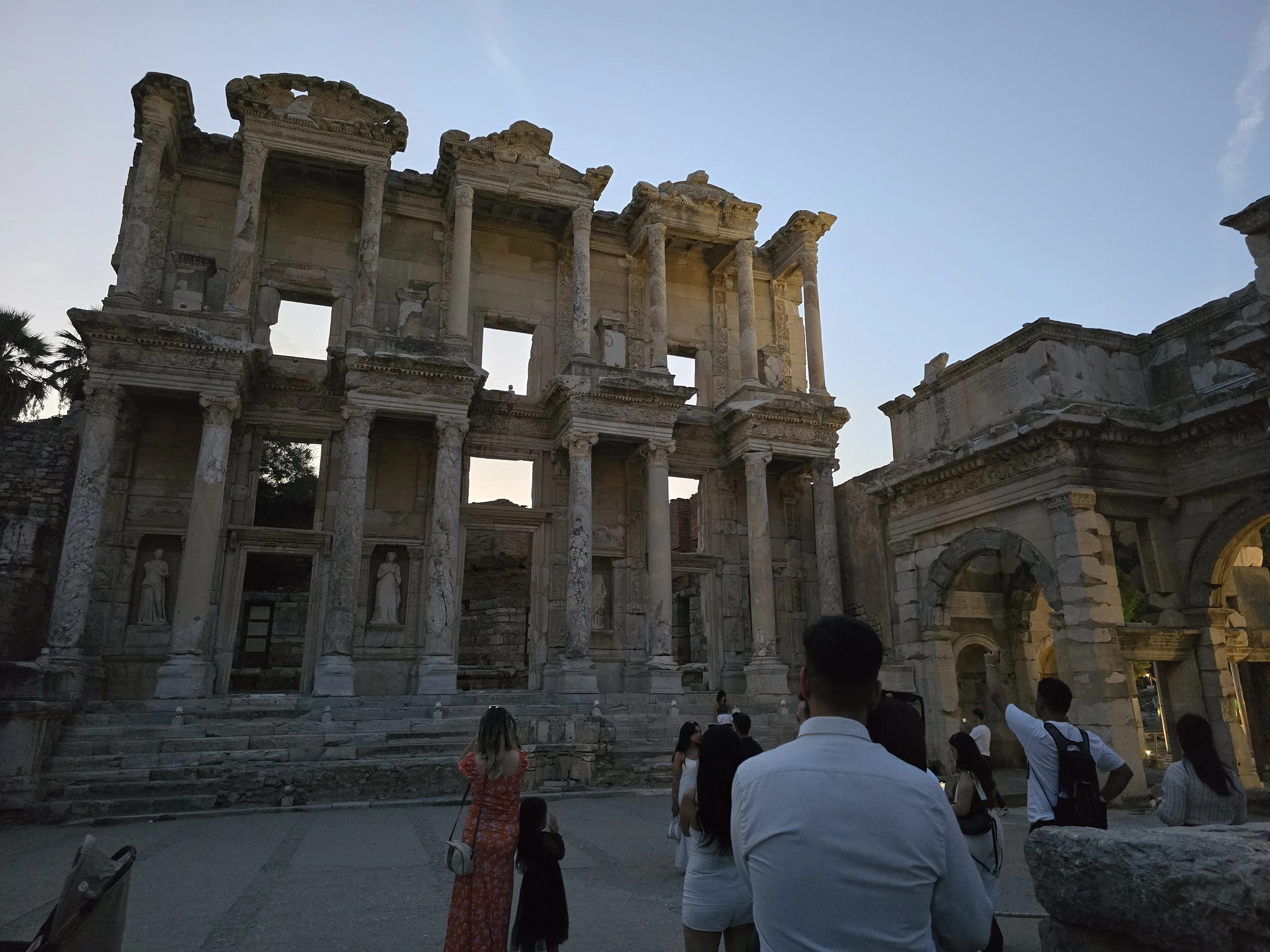
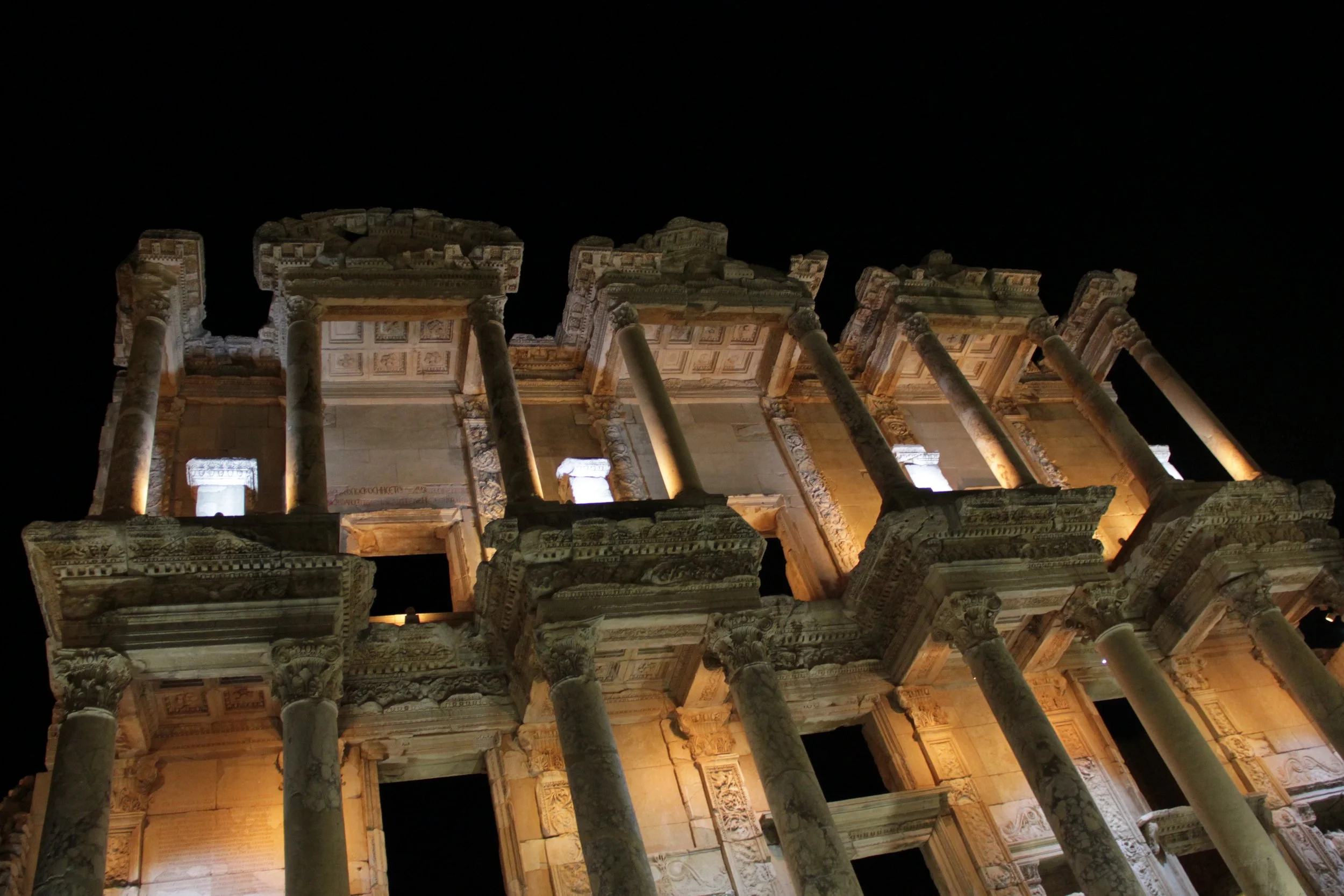
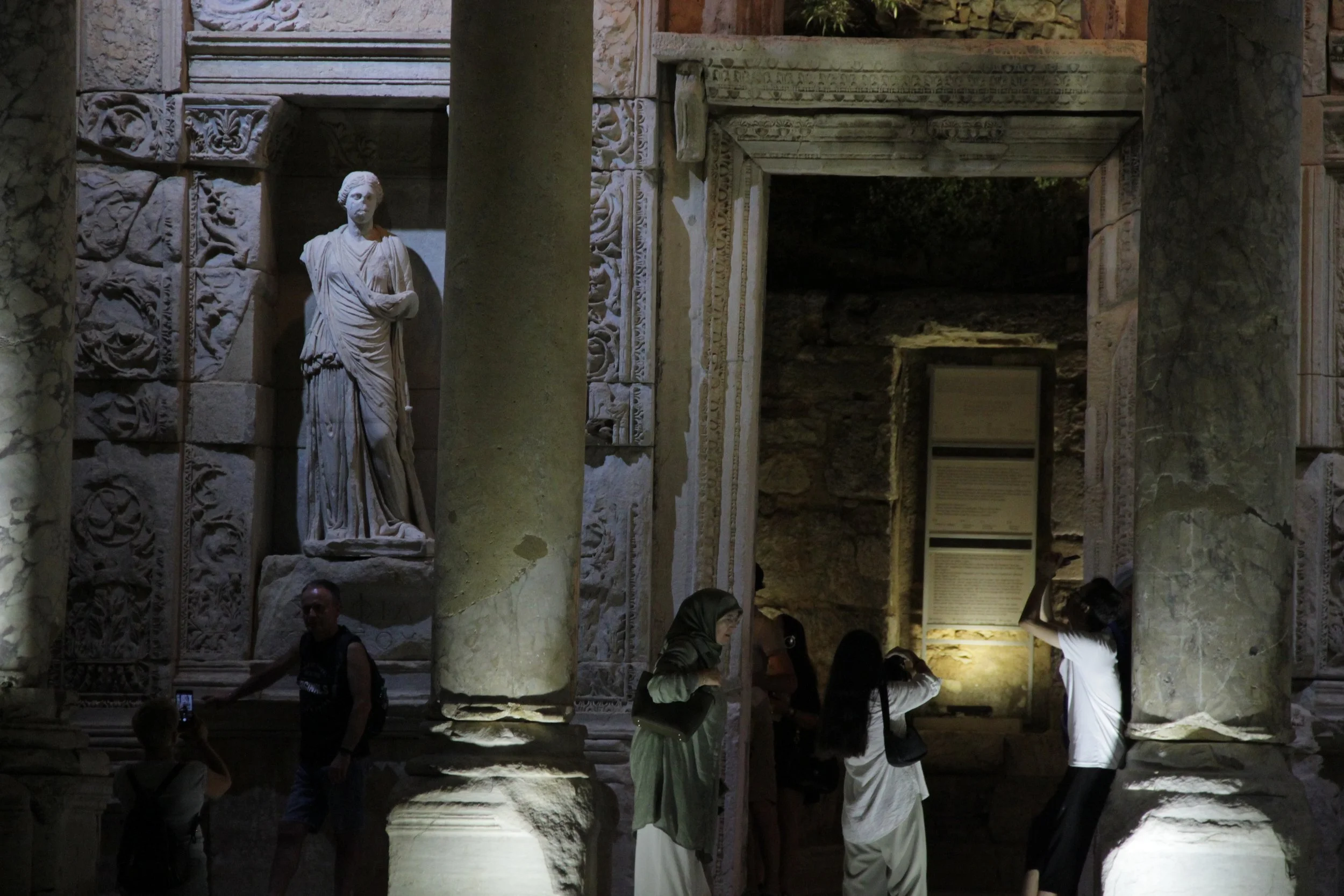
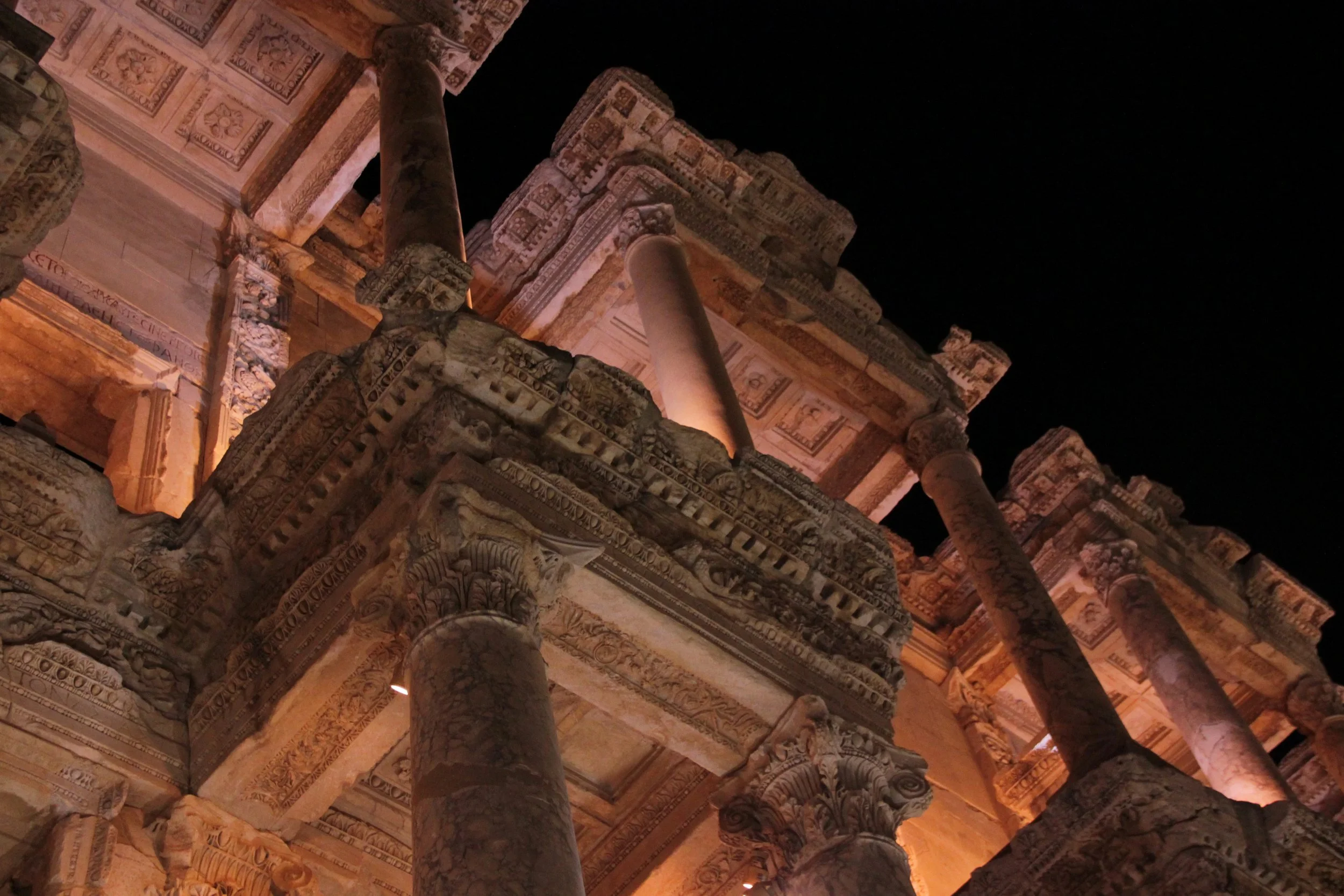
Library of Celsus — The two-story marble façade everyone photographs, built in the early 2nd century AD as a tomb-slash-library for a Roman senator. It's the visual signature of the entire site, and at night, it's lit dramatically enough to justify every "wow" from your travel companions.
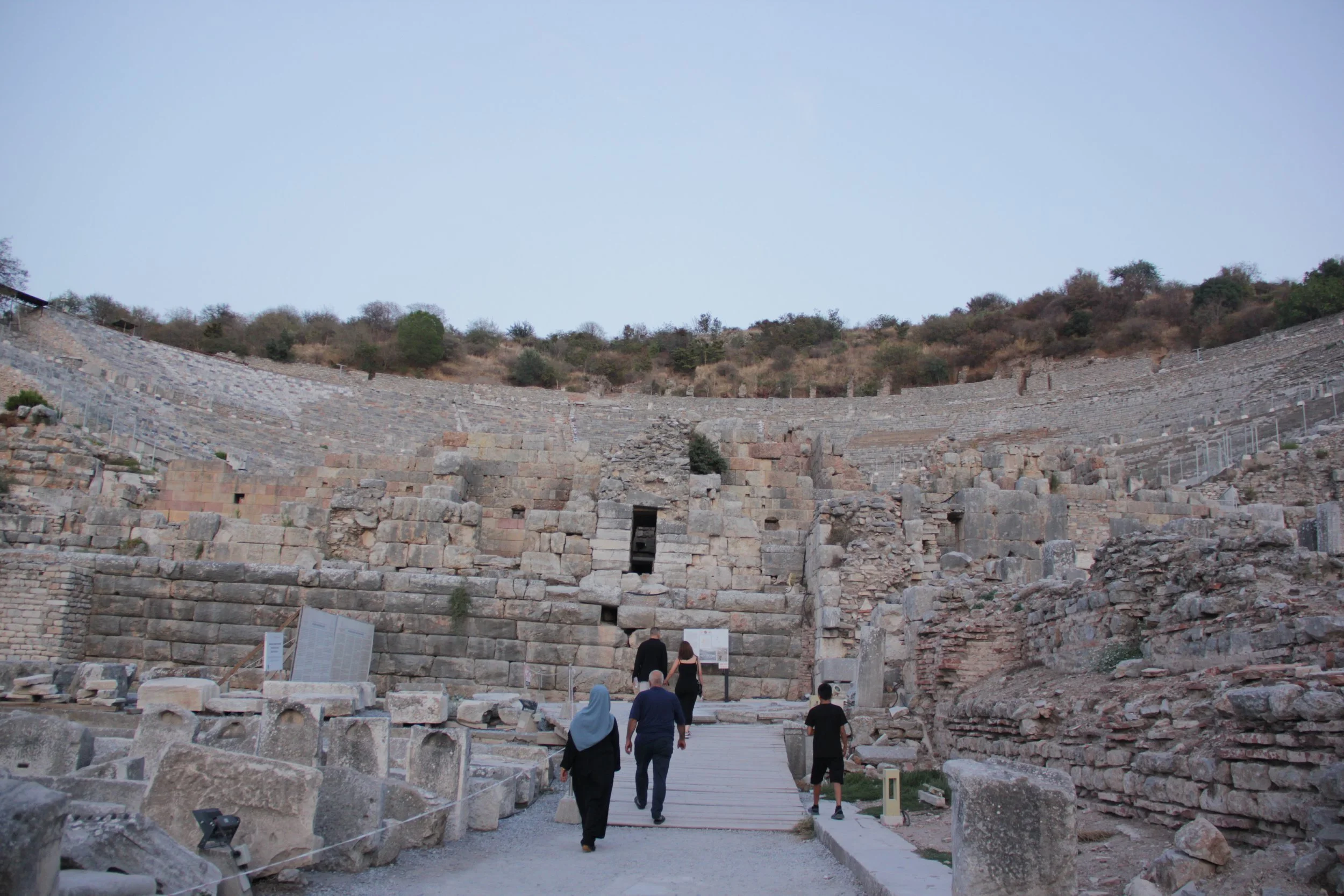
Great Theatre — A massive hillside theatre that once seated tens of thousands, and reportedly the spot where St. Paul preached to an unimpressed crowd. Still used for concerts today, which is partly why night visits occasionally get cancelled.
Terrace Houses — Luxurious, multi-story Roman hillside villas built for the city's wealthy upper class, with surprisingly intact mosaics and frescoes. Requires its own ticket, day or night, but it's the closest you'll get to seeing how the 1% of wealthy citizens actually lived.
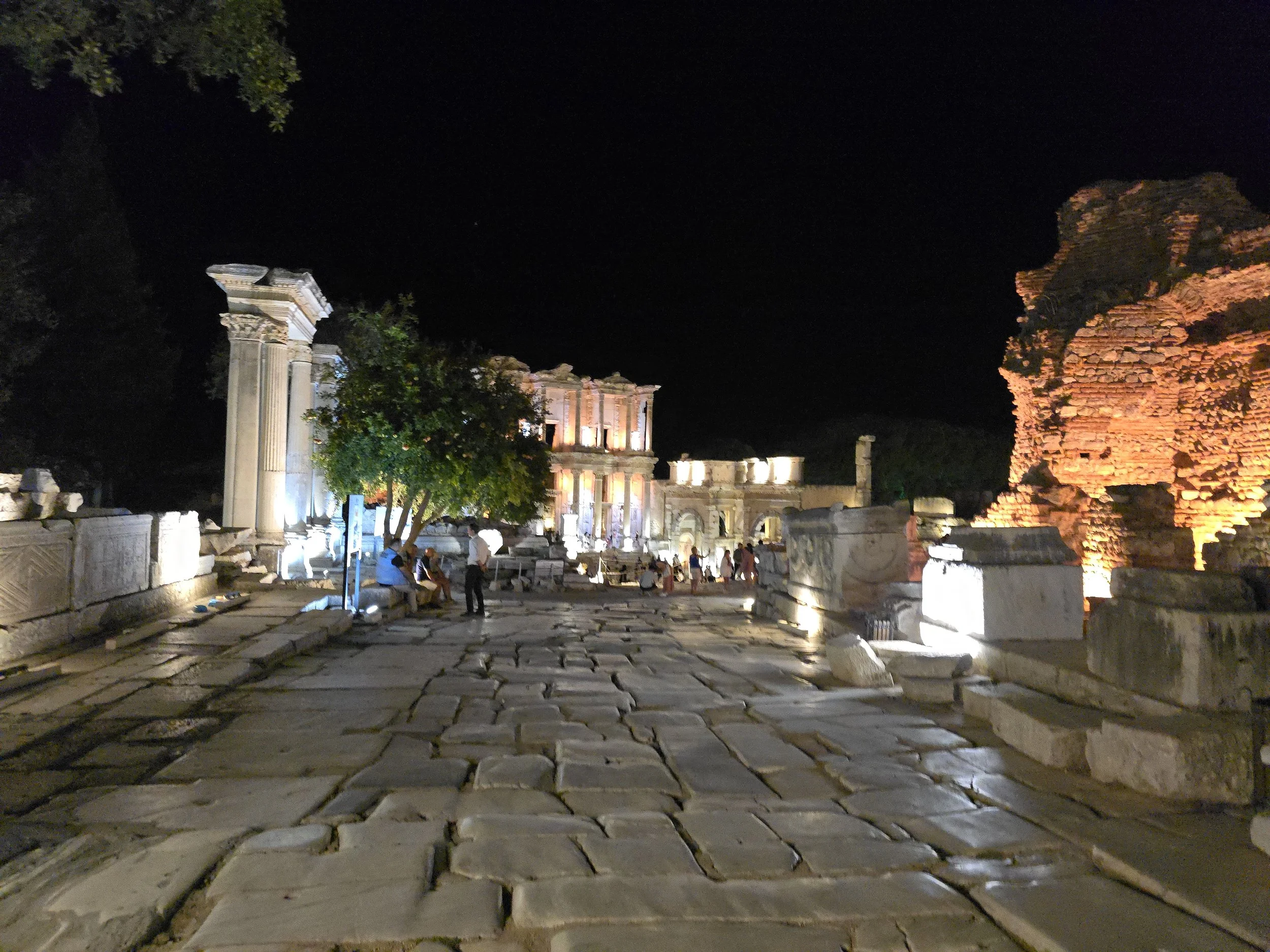
Curetes Street — The main marble thoroughfare connecting the upper and lower parts of the site, lined with statue bases, shopfronts, and column remains.
Temple of Hadrian — A small but ornately carved temple with detailed relief work on its arch — one of the most photogenic single structures on the route.
Public Latrines — Yes, ancient communal toilets, and yes, they're one of the most popular stops. Kids especially find this hilarious.
Commercial Agora and Odeon — The old marketplace and a smaller theatre used for council meetings and performances; both mainly part of the daytime route.
Ephesus at Night With Kids: What Actually Happened on Our Visit
We entered after 7 p.m. and stayed roughly two hours. With small kids, this was never going to be a slow, contemplative wander through every inscription — it was a quick overview, hitting the big landmarks and getting out before anyone melted down. If you're bringing children, mentally budget for a highlights tour, not a deep dive.
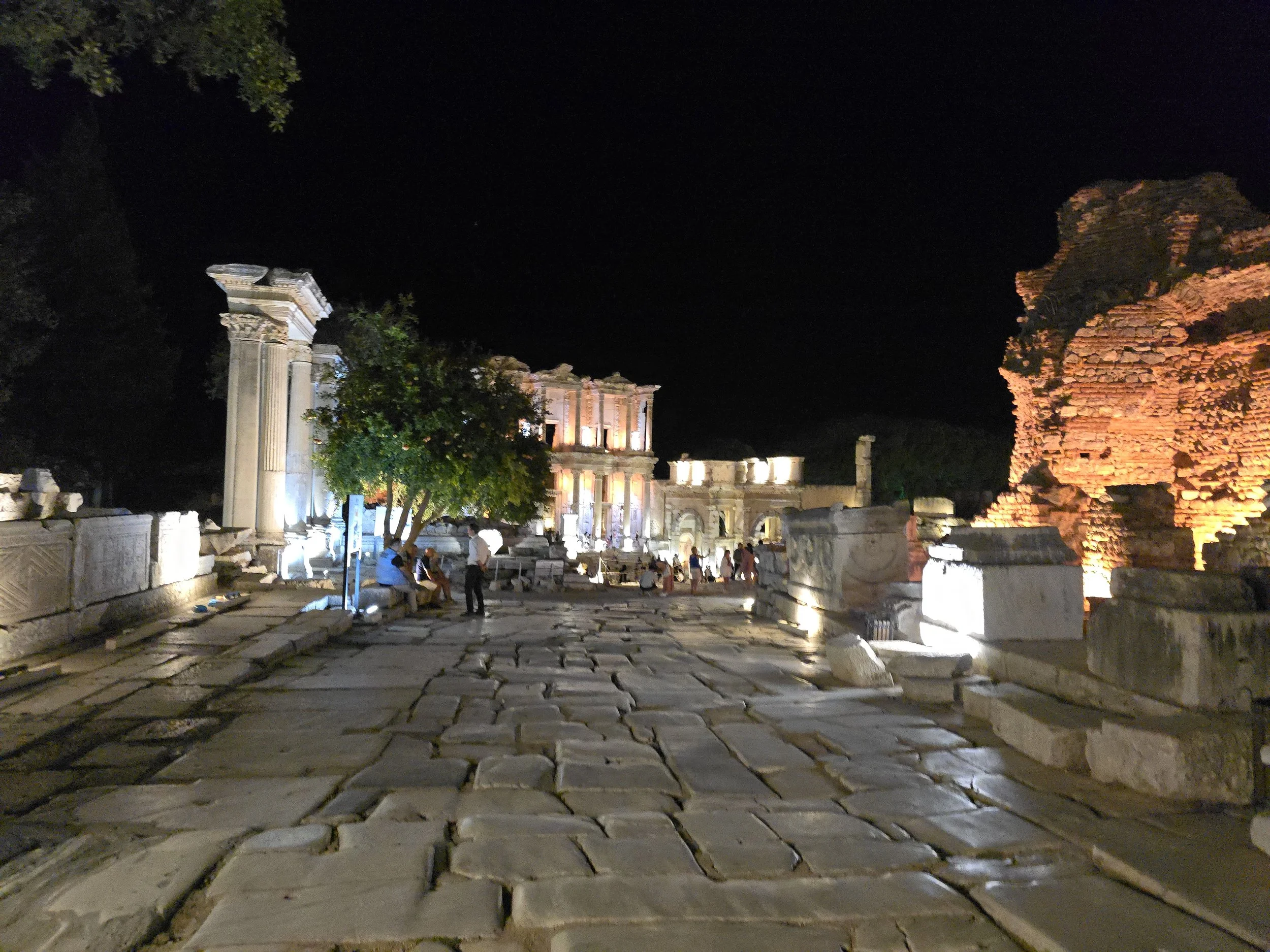
The route: marble road, slight incline, stairs only if you go deep into buildings
The main path is genuinely stroller-friendly — this surprised me, given how uneven parts of Ephesus can look in photos. From the Library of Celsus, the marble road climbs gently uphill, but there are no steps on the main route itself. Stairs only show up if you choose to detour into specific structures along the way (some of the smaller buildings and viewing platforms), which you can simply skip if you're pushing a stroller or just not in the mood.
The main event: the Library lights up
The single biggest draw of a night visit is watching the lighting on the Library of Celsus switch on, which happens shortly after sunset. There's a real "ooh" moment as the façade goes from silhouette to fully lit in front of you — it's the kind of thing that makes even a rushed, kid-paced visit feel worth it. Timing your arrival close to sunset means you might actually catch the lights coming on live rather than showing up to find it already glowing.
Best Age for a Night Visit
There's no universal "right age" here — it comes down to your own kid's schedule more than anything else. A night session starts at 19:00 and realistically means you're not leaving until closer to 21:00, possibly later once you factor in transport back to your hotel. So the real question isn't "is my child old enough for ancient ruins" — it's "can my child function past their normal bedtime without staging a small revolt."
Basically: check your kid's schedule before you check the museum's. Toddlers who nap on a predictable routine can do fine, especially in a stroller. Older kids who can walk the route themselves and stay up past 8 p.m. tend to handle it best. If bedtime is already a battle at home, save yourself the trip and go early morning instead.
Two Gates, One Ancient City: Lower vs. Upper Entrance
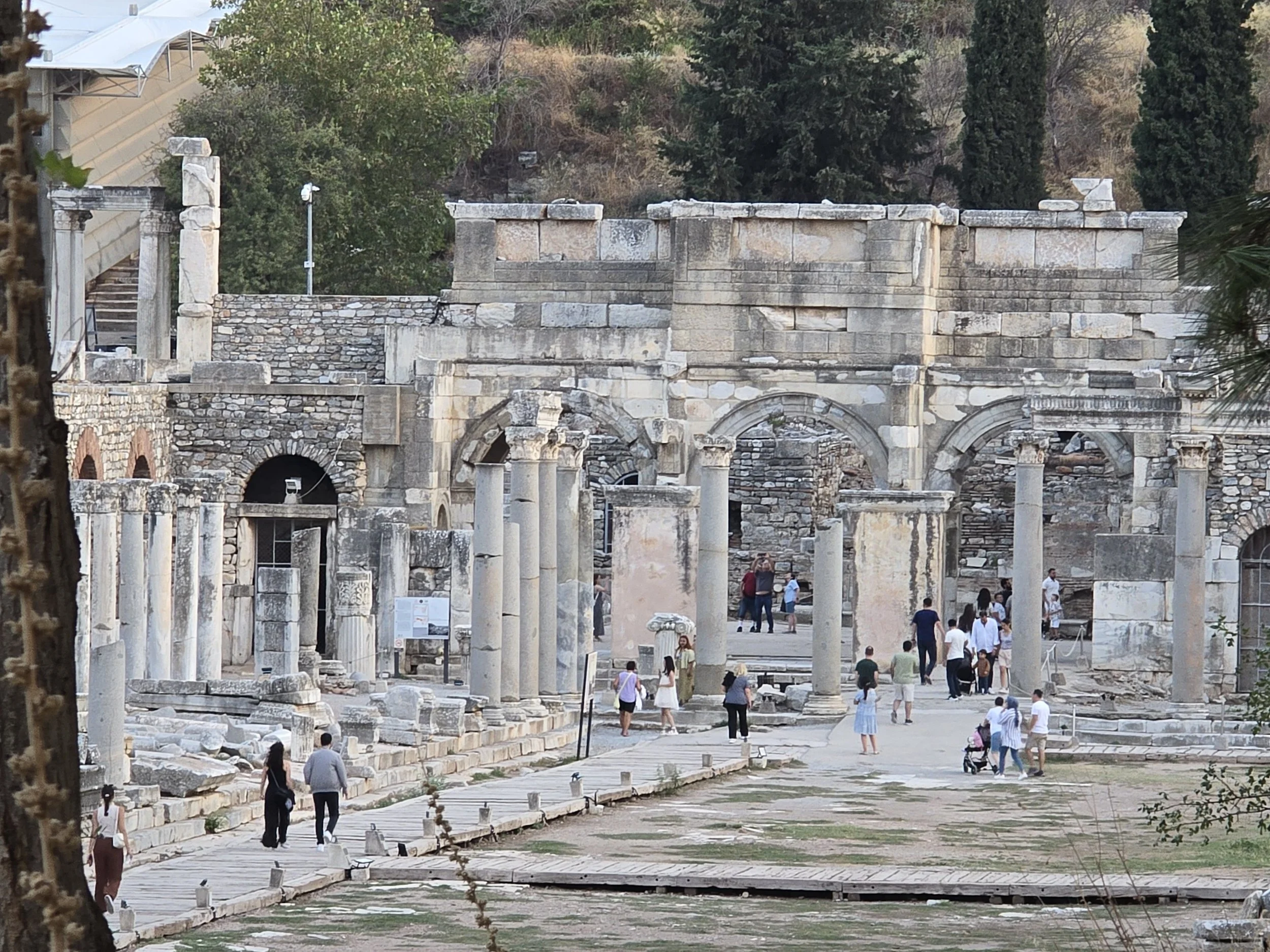
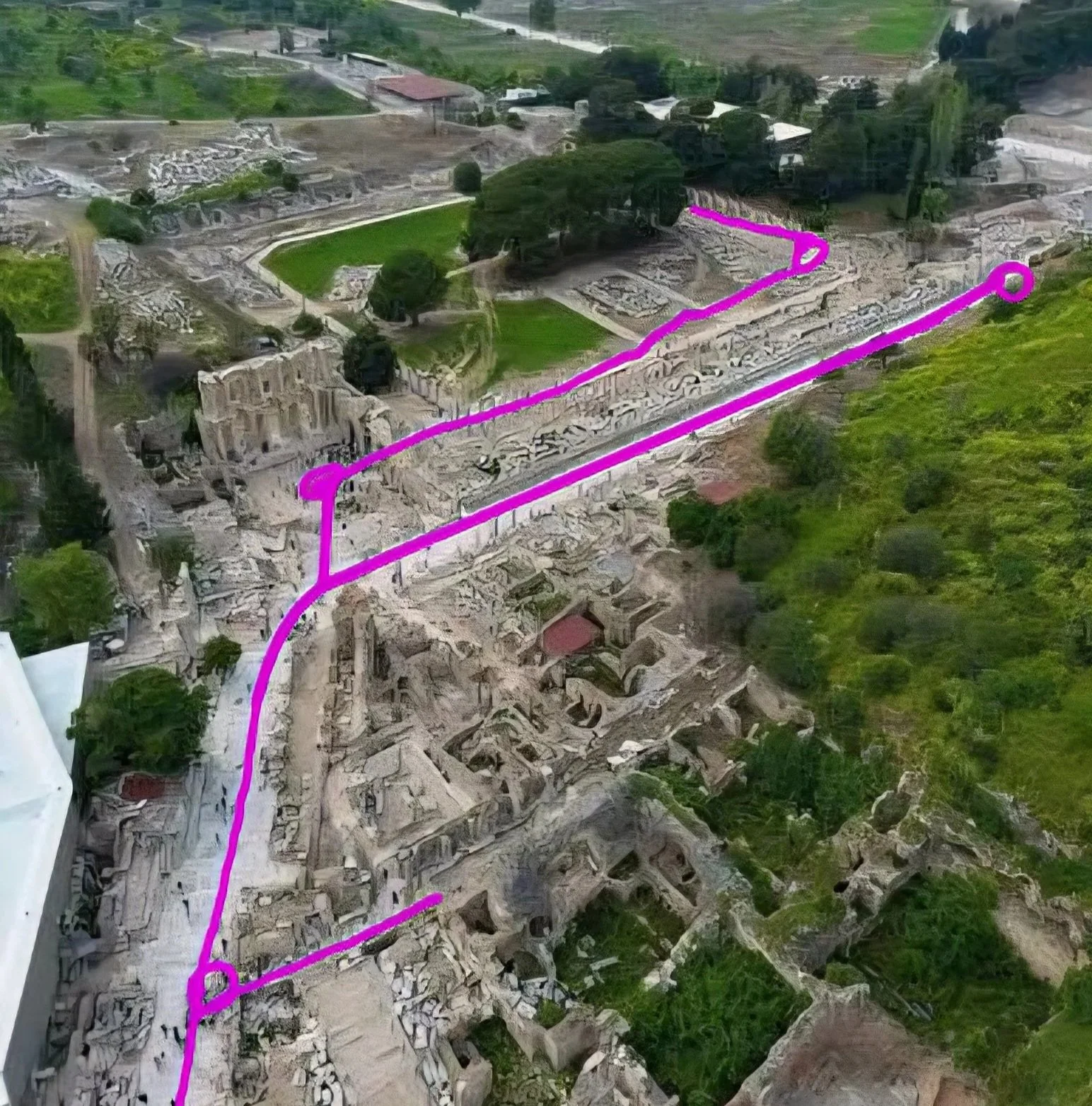
Ephesus has two entrances — a lower gate and an upper gate — and this matters more than it sounds like it should. At night, only the lower gate is open, so don't plan a taxi drop-off at the upper entrance expecting to walk in. During the day, both are active, and picking one over the other changes whether you're walking mostly downhill or uphill through the site.
Both gates have wheelchair-accessible bathrooms, which is a small but genuinely useful detail if you're traveling with a stroller, a wheelchair user, or just small kids who need a bathroom stop or a snack the second you arrive — there's also a small cafe just inside the lower gate if you need to refuel before heading in.
The Map of Ancient City Ephesus
Quick FAQ
Is Ephesus open at night in 2026? Yes, Wednesday through Saturday, roughly 19:00–23:00, during the warmer months — confirm exact season dates on the official site.
How much does the night ticket cost? The same as the daytime ticket, €40 per adult, with Terrace Houses as a €15 add-on.
Can I use one ticket for both day and night? No — they're treated as separate visits with separate tickets, and there isn't a reliable way to simply stay through the gap between sessions.
Is the main route stroller-friendly at night? Yes — the main marble road has no stairs, though a slight uphill grade from the Library of Celsus. Stairs only appear if you enter specific side structures.
Which gate is open for night visits? The lower gate only.