

Our One-Day Road Trip Mallorca Itinerary: from Palma to Alcudia + Map
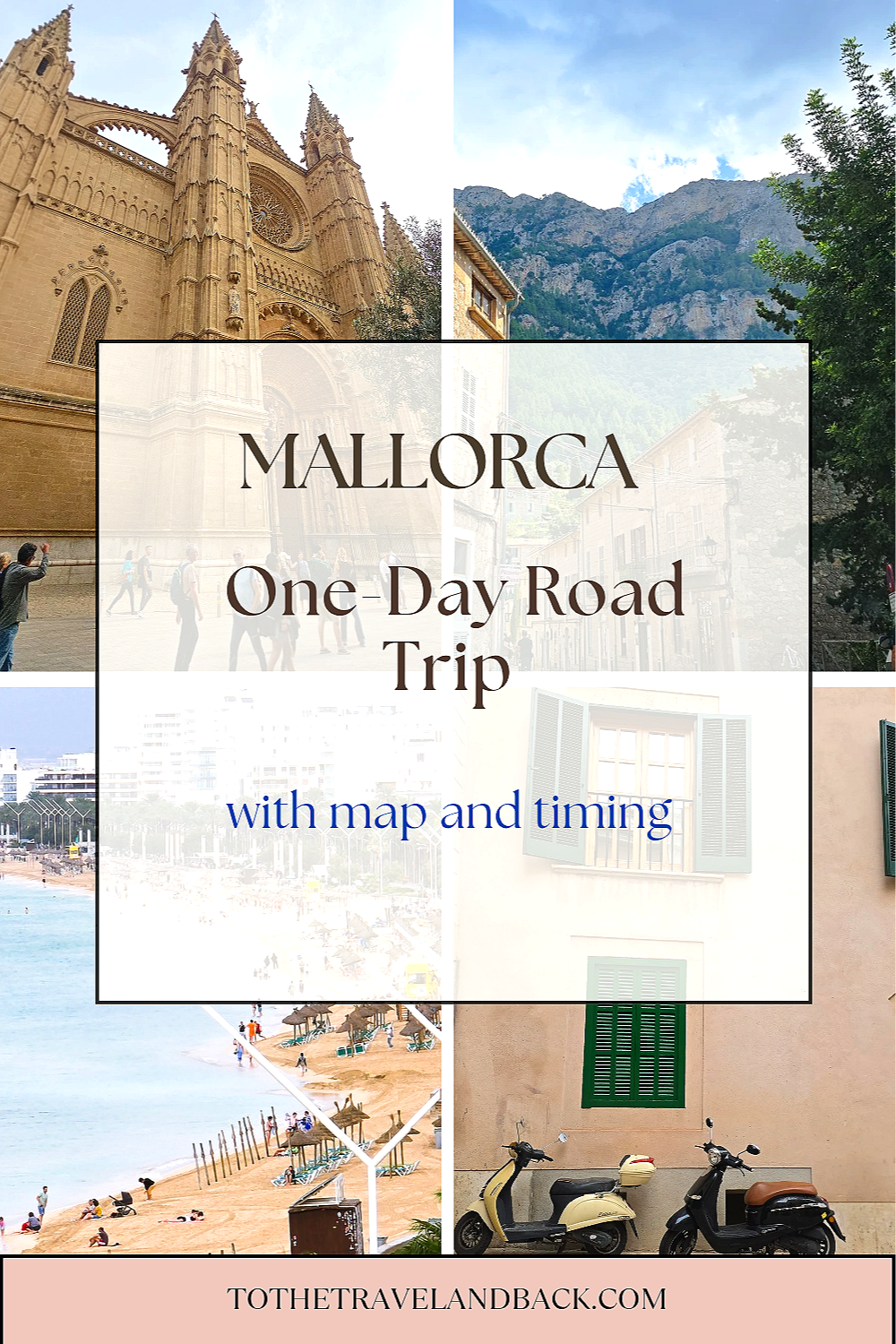
Mallorca is the largest and one of the most fascinating of the Balearic Islands.
Mallorca has it all: historical sites, beautiful beaches, and stunning natural landscapes. And I know that you want to see it all together. And sometimes in one single day.
Is it possible? Yes. But you need to prepare!
Road Map of Mallorca Trip Map
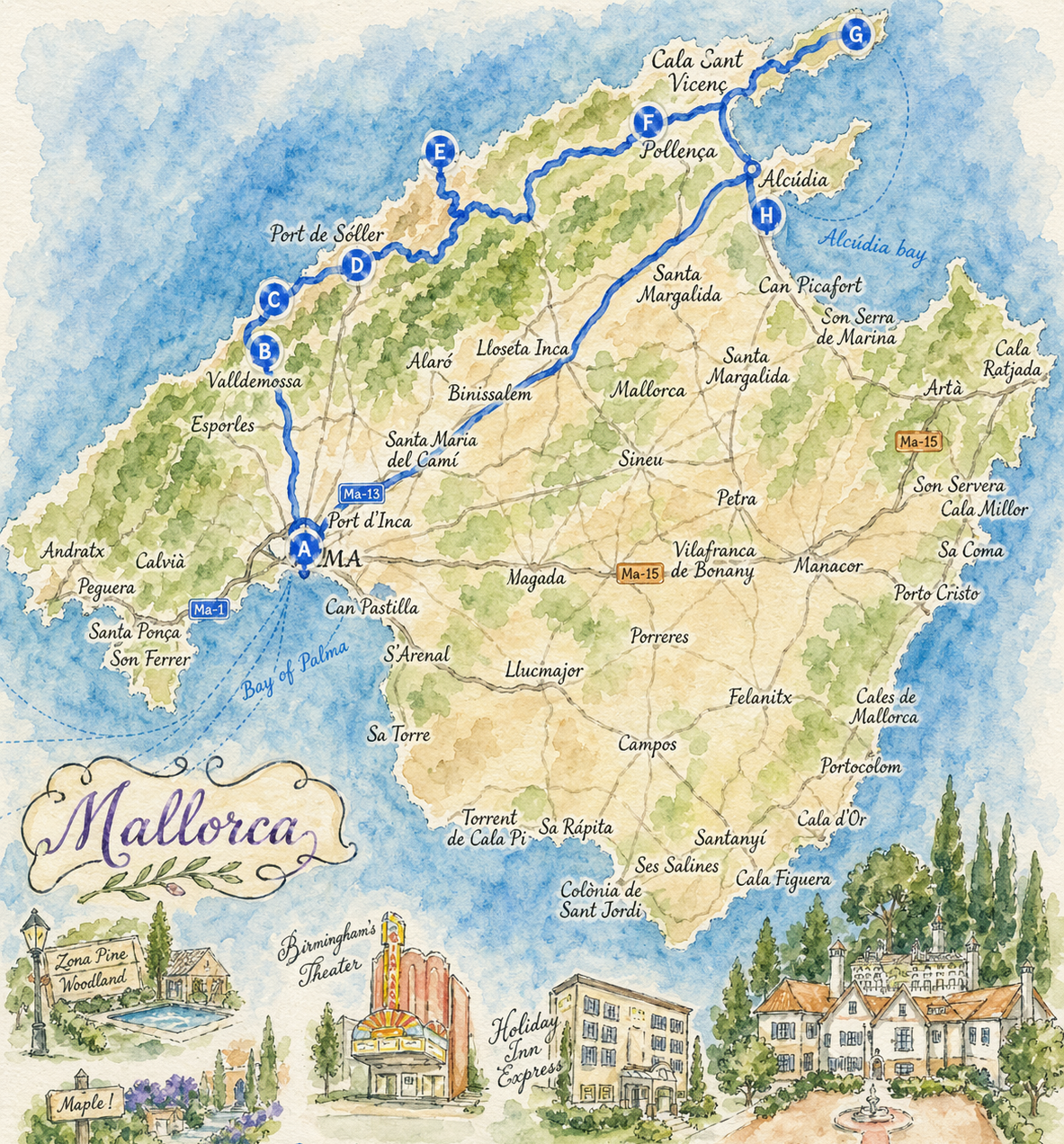
Trip to Mallorca: Do You Need a Car?
Yes, you need a car for this one-day Mallorca itinerary. While Palma is walkable and public transport connects major towns, a rental car gives you the freedom to hit multiple locations in a limited time. Buses between mountain villages run every 2 hours, which simply won't work for a packed day trip.
Mallorca is underrated as a road trip destination. I have tried to find a detailed trip for the Mallorca road, and “Palma in one day” was the only answer. So I decided to experience and to test my own itinerary.
If your option is one day in Majorca, it’s better to stay in Palma and look around the city. If you want to have a trip to Majorca without a car, your options are the railway and buses. But if you land in Palma or nearby, park yourself on a beach for a week, and have one day for a trip - that itinerary is for you.
You can use this itinerary for a couple of days. But if you choose a 1-day trip, this route will not be a slow travel; it’s “see, take a photo, and drive to the next point“. One with mountain monasteries draped in morning mist, hairpin roads carved into cliffs, turquoise reservoir lakes that look photoshopped, and a canyon beach you'll reach through a literal tunnel in the rock.
This is that day. And I'm going to make sure you don't miss a single detail of it.
Driving in Mallorca: What You Actually Need to Know
You need a car. Full stop. This itinerary covers the Tramuntana mountain range, the northwest Mallorca coast, and the northern bays — public transport will not get you there and back in a day. Rent in Palma and pick up early. Find in advance. Choose the rental that gives the possibility to take off very early and leave the car back in the late evening (or even midnight).
Start early. The magic of this route depends entirely on beating the tour buses. And timing is crucial. Set your alarm. 7:00 AM departure from Palma is the whole strategy.
The road: Your main road is Ma-10, and Ma-11 for the way back. Driving in Mallorca along Ma-10 is a bit hard because of the wavy road.
Fill up with petrol in Sóller or even earlier. There are almost no fuel stations between Sóller and Pollença on the mountain road. Don't assume there's one around the next corner — there isn't.
Best time to visit Mallorca
The best months to visit Mallorca are March through May, when temperatures sit in the 60s and 70s. Summer tourists haven't descended yet, and outdoor cafes bustle with locals. September to October offers another sweet spot, warm enough to swim but sans the crowds. I visited in June and watched the island get progressively packed by month's end.
Summer months (June, July, August) bring heat waves and tourist throngs. On the contrary, January and February offer decent deals on room rates but cooler weather. The island gets sleepy from November through April, though you can still visit.
Mallorca Road Itinerary:
Start at Palma
Start your day early, around 7:00 AM. This timing lets you explore Palma before crowds arrive and positions you perfectly for the mountain drive during optimal light.
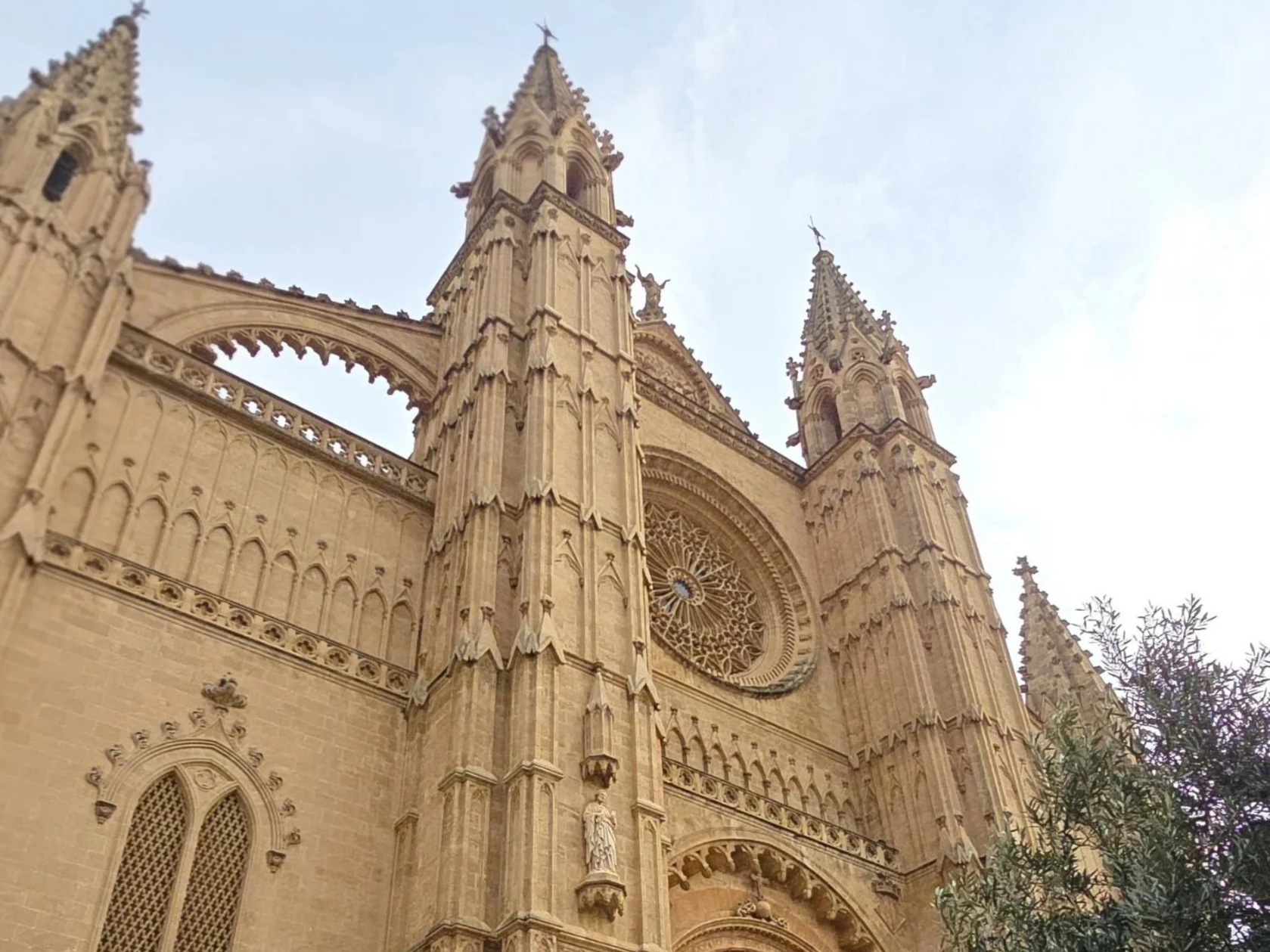
Nevertheless, if you start your trip from Ca'n Pastilla or S’Arenal, your trip will go through the Palma. It’s better to spend one whole day in Palma, but if you want “see and run”, then visit the Cathedral of Santa Maria of Palma (known as La Seu Cathedral) that is a Gothic Roman Catholic Palma Cathedral for 30 minutes.
Parking: Aparcament Parc de la Mar - SMAP
Stop 1: Valldemossa — 8:00 AM
The rule for Valldemossa is simple: arrive by 8:00 AM. The tour buses descend around 10:00, and before that, this village belongs entirely to you.
Valldemossa is the kind of place that makes you understand why people abandon their perfectly good city lives to move to the Mediterranean. The streets are narrow, paved in worn stone, and absolutely drowning in flower pots. The centrepiece is the Royal Charterhouse — a former monastery where Frédéric Chopin and George Sand famously wintered in 1838 (and, by all accounts, had a spectacularly miserable time, which somehow makes it more romantic). It's worth paying the entrance fee to wander inside.
But first: breakfast. Head straight to Pastisseria Ca'n Molinas, which has been doing one thing perfectly since 1920 — the Coca de Patata, a soft, sugar-dusted potato pastry that is Mallorca's most important culinary contribution to humanity. Get two. You'll thank me.
If you're planning to do lunch some day here in Valldemossa, QuitaPenas is your spot — tiny, tucked into a historic alley, and serving authentic Mallorcan platters that'll make you forget every tourist restaurant you've ever visited.
Parking: Use the large paid lot at the village entrance, signposted as Parking Valldemossa. Do not attempt to drive into the residential streets — they're narrow, permit-only, and the locals are rightfully unforgiving about it.
Started late? Just skip Valldemossa. Go strait to Soller, then to Deia, by road Ma-11 from Palma.
Take out the breakfast or coffee with you.
Stop 2: Mirador de Sa Foradada — 9:30 AM
A short drive from Valldemossa, you'll find one of Mallorca's most dramatic viewpoints — a natural rock arch punching straight out into the cobalt sea. It's called Sa Foradada (the "perforated one"), and it earns the name.
Park near the Son Marroig estate (the lot fills fast in the afternoon, so you're winning by being here early) and take it in. The views over the water are genuinely breathtaking.
If you have the energy — and I really hope you do — the 40-minute walk down to the base of the rock leads to a rustic paella restaurant right at the water's edge. The path is rocky but manageable in good footwear, and the reward is eating paella at a table that might as well be in the sea.
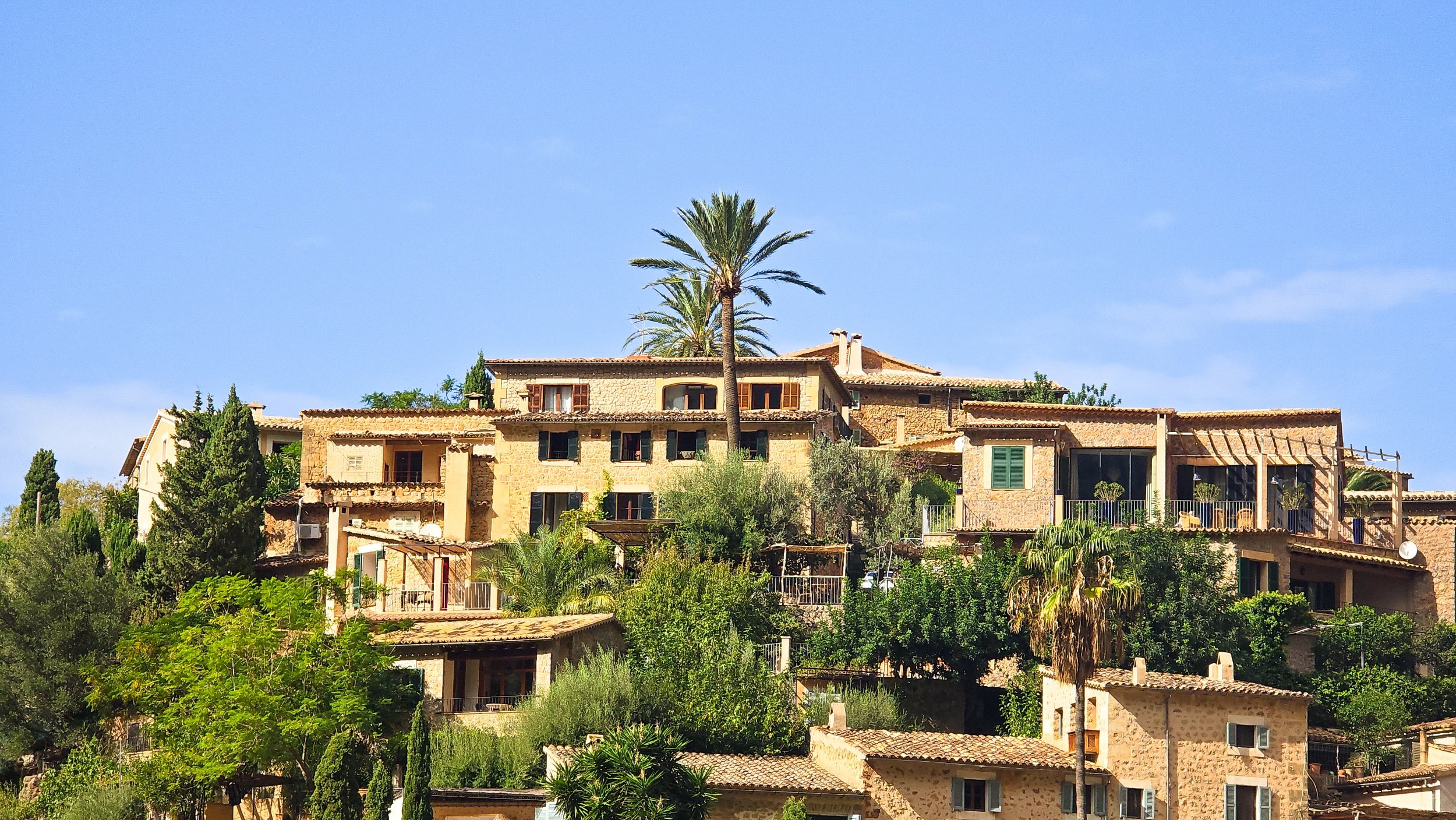
Stop 3: Deià — 10:30 AM
Deià has been pulling in poets, painters, and rock stars for decades, and it shows. The village clings to a hillside above the sea with the kind of effortless beauty that feels slightly unfair.
Robert Graves lived here. Princess Diana has been here in La Residencia. The light is somehow different — warmer, more golden, even in the morning. You'll understand it when you arrive.
Take your time walking the winding streets, then stop at Sa Fonda for a coffee on the terrace. It's a classic, slightly bohemian café-institution with views over the village rooftops — exactly the kind of place you'll want to linger in before reminding yourself you have a canyon to get to.
Parking note: Use the Clot parking lot or the Aparcamiento general near the town exit (look for signs near S'Empeltada). If you park on the Ma-10 road, make absolutely sure your tyres are fully inside the white lines — parking wardens here have a very good eye.
Don't skip Llucalcari. It's barely a five-minute drive from Deià — a tiny, pedestrian-only hamlet where you park on the road and walk down into near-complete silence. Stone walls, wild herbs, and not a souvenir shop in sight. It takes fifteen minutes and feels like stepping back two centuries.
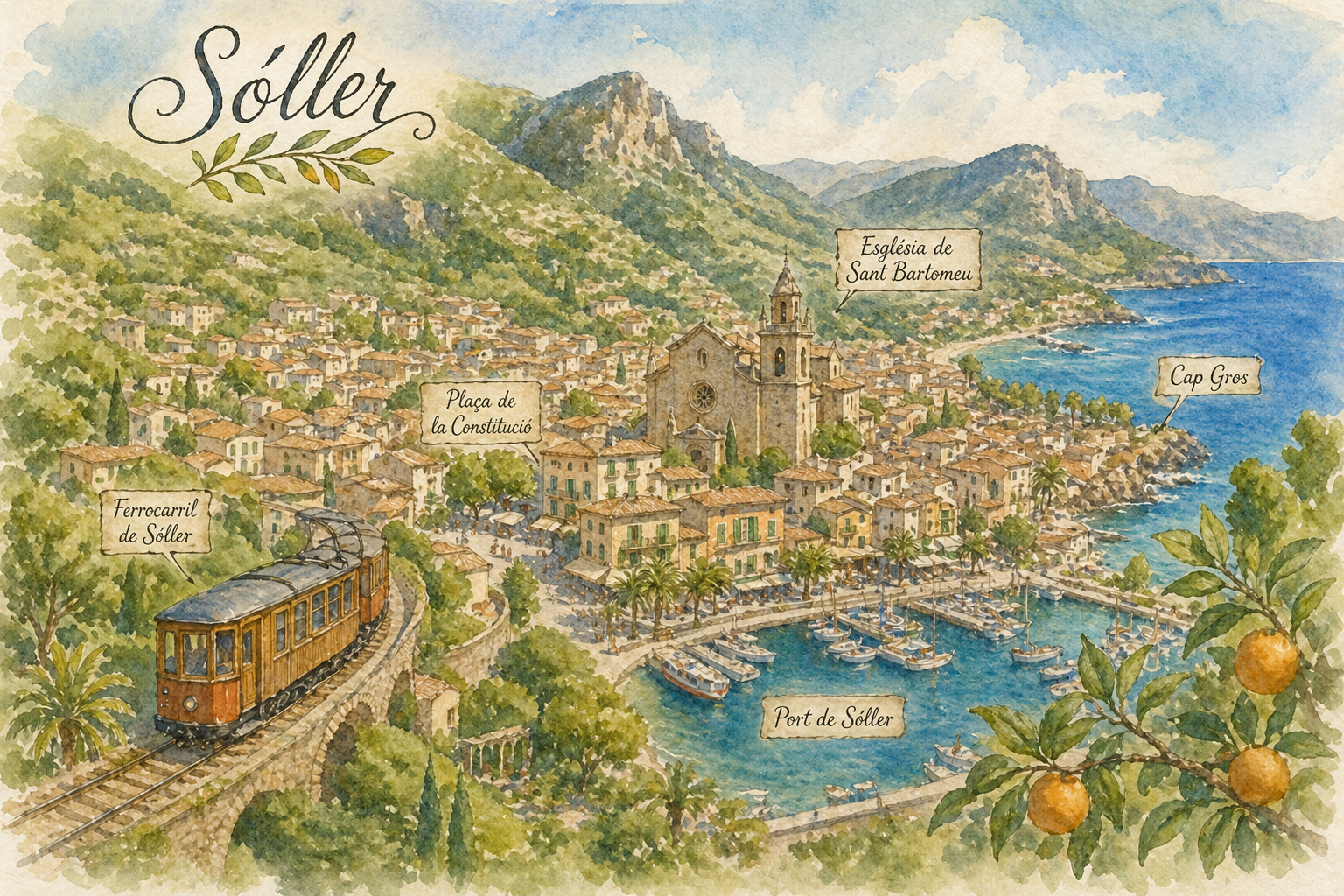
Stop 4: Sóller — 12:00 PM
Sóller is where the day shifts into a lower gear, and that's exactly the point.
The town sits in a valley ringed by orange groves, with a gorgeous Modernist church anchoring the central square and a vintage wooden tram rattling through on its way down to the port. It's charming in the most genuine way — not performatively pretty, just actually lovely.
This is your lunch stop, and it's also your petrol stop. Fill up the tank here. I've mentioned this already, but I'm mentioning it again because the alternative is coasting down a mountain road on fumes.
For lunch, Café de Sóller gives you the full square-side experience — a cold drink, something delicious, and people-watching that costs nothing. If you want something more special, Ca'n Boqueta is set inside a restored town mansion and offers a high-quality fixed-price lunch menu that punches well above its price point. Book ahead if you can.
Parking: Try Aparcament des Teixeres or the underground lot beneath the main square.
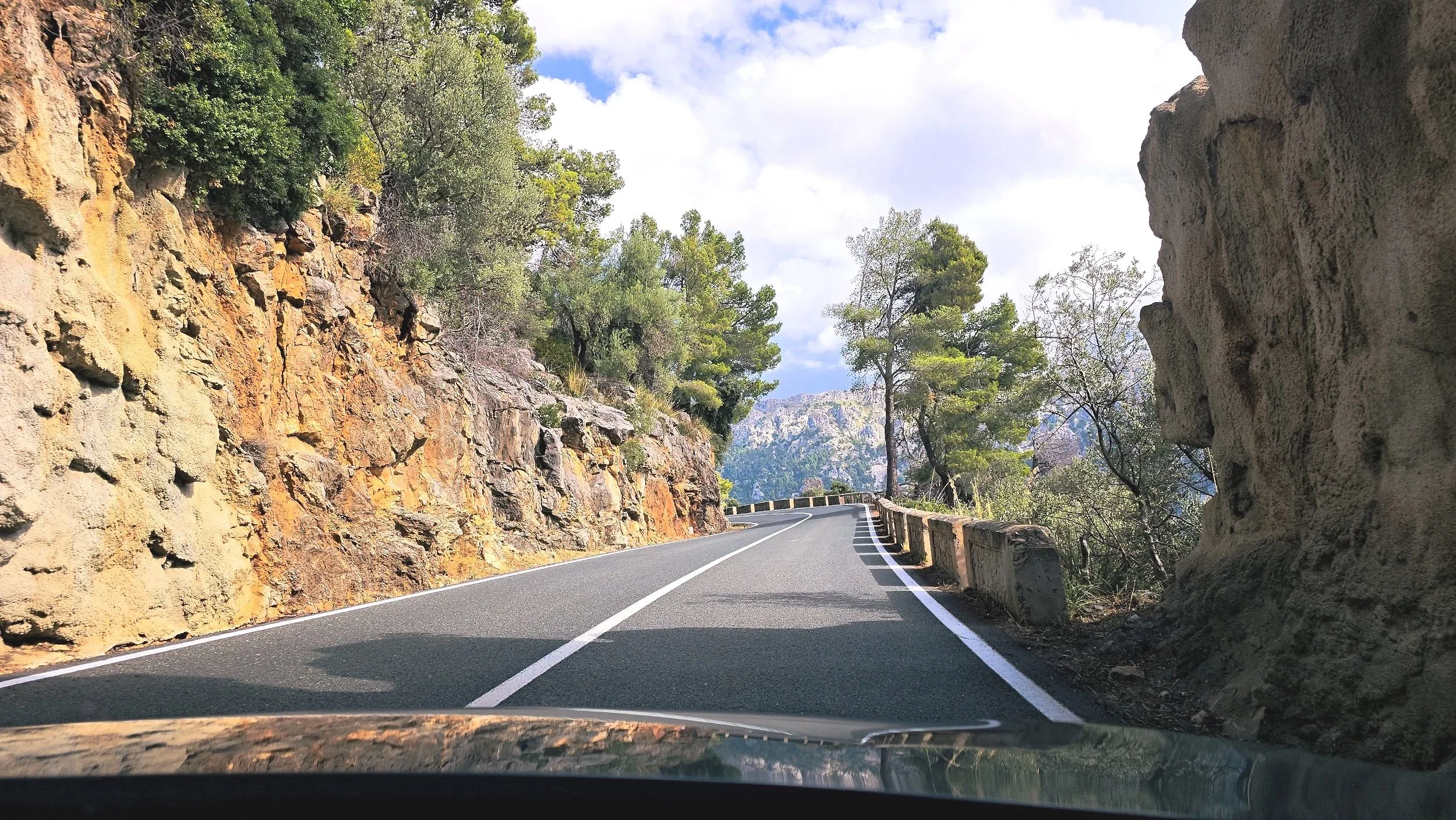
Stop 5: The Mountain Road (Ma-10) — Early Afternoon
This is where the day becomes something you'll talk about all year. Take 2-minute stops for the photo to be in time.
The Ma-10 mountain road from Sóller northwards is one of the great drives in Europe. Full stop. It climbs through the Tramuntana range past the Cúber and Gorg Blau reservoirs — two turquoise lakes that look genuinely surreal, sitting between the island's highest peaks like something from a fantasy novel. Pull over and walk to the water if you have time. You won't regret it.
Watch for Mirador de s'Entreforc — a viewpoint over a dizzying canyon that'll have you clutching the guardrail in the best possible way.
Then there's Nus de sa Corbata — the "Tie Knot" — a 270-degree hairpin curve that spirals the road back under itself like a corkscrew carved into the cliff face. It is the most photographed road moment on the island, and you'll understand why the second you see it. Stop, get out, and take the photo from above before you drive through it.
Important driving note: If you encounter a coach bus on the narrow descent to Sa Calobra, pull over early into a wider section of road and let them through. Buses have right of way, and they genuinely cannot reverse back up those hairpins. The road has enough room for both of you — but only if you give up your side willingly and early.
Stop 6: Sa Calobra — 2:30 PM
Time this one carefully: aim to arrive around 2:30-3:00 PM.
The day-tripper boats from Port de Sóller start heading back around then, which means the crowds thin out and the canyon suddenly feels enormous. Arrive at noon, and you're fighting a sea of people. Arrive at 3:00, and you get something close to magic.
The experience has two parts. First, the descent into Sa Calobra itself — a single road of endless hairpin turns that corkscrews down to the coast. It's thrilling and slightly terrifying and completely unforgettable. Then, at the bottom, you walk through the Túnel de Sa Calobra — a narrow pedestrian passage cut straight through the rock — and emerge into the Torrent de Pareis gorge.
The gorge is one of the most dramatic natural spaces on the island: walls of grey limestone rising hundreds of metres on either side, a pebble beach at the end where the mountains finally meet the sea. Sit there for a while. It demands it.
Parking: There is one large paid lot at the bottom of the descent (around €2.50/hour). That's it — your only option. Do not park on the hairpin turns. It's dangerous, it blocks the road, and you will be towed without mercy.
If you are late: Just skip Sa Calobra if you want to see Mirador de Es Colomer and Platja de Formentor. You need to choose between this two. I would choose the second.
Stop 7: Pollença — 4:00 PM
It’s a 30-40 minute stop.
Coming down from the mountains into Pollença feels like re-entering civilisation — in the gentlest, most charming way possible.
The town is everything a Mallorcan inland town should be: honey-coloured stone, a Sunday market square, and the 365 Calvari Steps leading to a hilltop chapel with sweeping views over the northern coast. One stone step for every day of the year. Yes, you're climbing them. The view from the top is worth every single one.
Parking: A large free car park near the town entrance is signposted as Pàrquing gratuït. No need to hunt around.
If you are late: if you saw Soller and Deia, you can easily skip Pollenca.
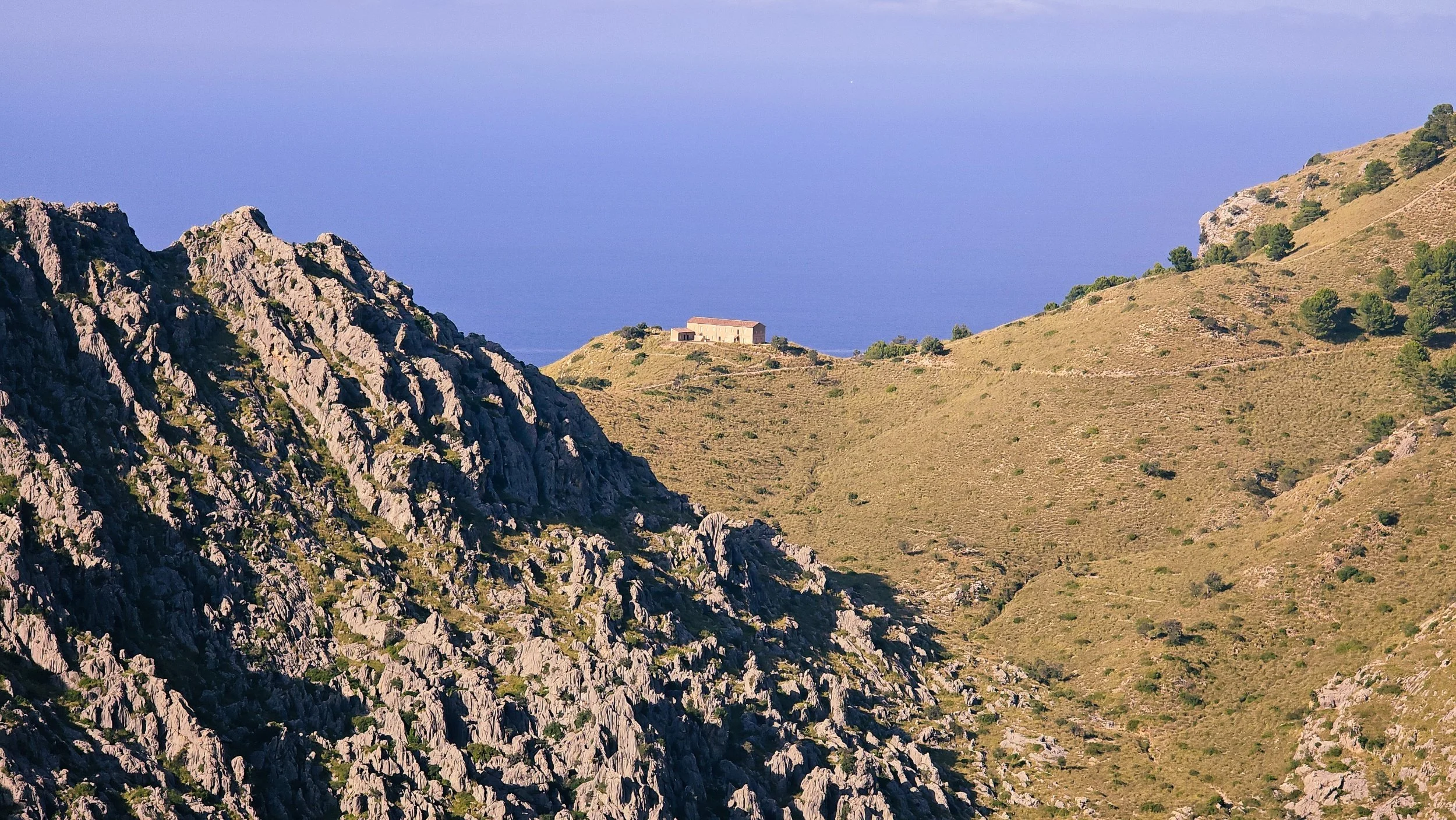
Stop 8: Mirador de Es Colomer — 5:30 PM
From Pollença, drive out onto the Cap de Formentor peninsula — a narrow finger of land that juts into the sea between two bays — and stop at the Mirador de Es Colomer before you go any further.
The viewpoint sits at the edge of sheer cliffs dropping straight into the sea, with the rocky islet of Es Colomer floating below and the entire Formentor coastline stretching out ahead of you. It's the kind of view that makes you genuinely pause and say nothing for a minute. Bring your camera, but know upfront that no photo will quite capture the scale of it.
The road out to the mirador is narrow and winding — one of those drives where you're equally grateful for the scenery and the guardrails. Take it slow and enjoy every corner.
Tip: This is also a great place to check your timing. If there's still good light left, push on to Platja de Formentor. If the sun is getting low, head straight there — you'll want to be on the beach, not the road, for the golden hour.
Stop 9: Platja de Formentor — Early Evening
The Formentor peninsula saves its best surprise for last.
Platja de Formentor is tucked into a sheltered pine-fringed cove about ten minutes further along the peninsula road — and it is, without any hyperbole, one of the most beautiful beaches in Spain. The water is that impossible shade of blue-green that looks filtered but isn't. The pines come right down to the shore. The beach itself is calm, wide, and backed by nothing but mountains and trees.
It's been a beloved spot since the 1930s — the legendary Hotel Formentor has been sitting at the end of this bay for nearly a century, and you'll understand why the moment you see it.
If you've been on your feet since Valldemossa, this is your reward. Take your shoes off, walk into the water, and just be here for a while.
Parking: There's a paid car park at the beach entrance. In peak season it fills up, so arriving before 5:00 PM gives you the best chance of a space — and more importantly, the best of the afternoon light.
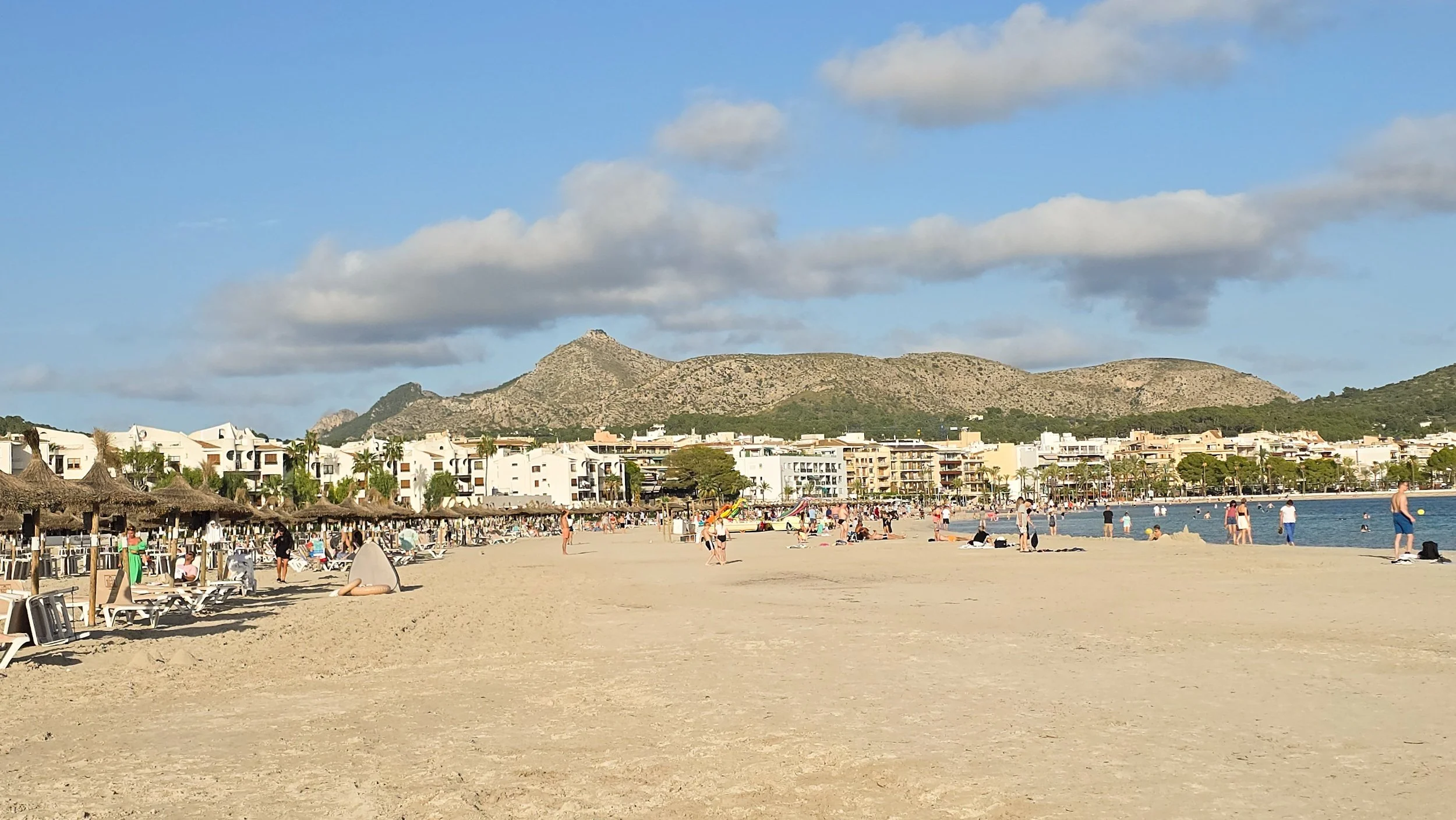
Stop 10: Platja de Muro — Sunset
End here. Always end here.
Platja de Muro is the northern bay that quietly outperforms every other beach on the island at this specific hour. The water is crystal-clear and barely knee-deep for what feels like forever — turquoise all the way out. This is the best family beach with little kids. And behind you, the entire Tramuntana mountain range you've just driven through turns amber and rose as the sun drops.
It's the kind of sunset that makes you want to book a return flight before you've even left. In this place you can stay till late evening.
Parking: Street parking in the residential zones behind the beach is usually available, though the areas near the big hotels fill up faster. A short walk from a quieter street is still very much worth it.
Drive back home by road Ma-11 for the fastest route. And the end of the road you can find fuel stations.
For the longest trip, you can use the same route and stay at Soller, Deia, and have a beach time at Sa Calobra, and stay at a mountain village for the night.